
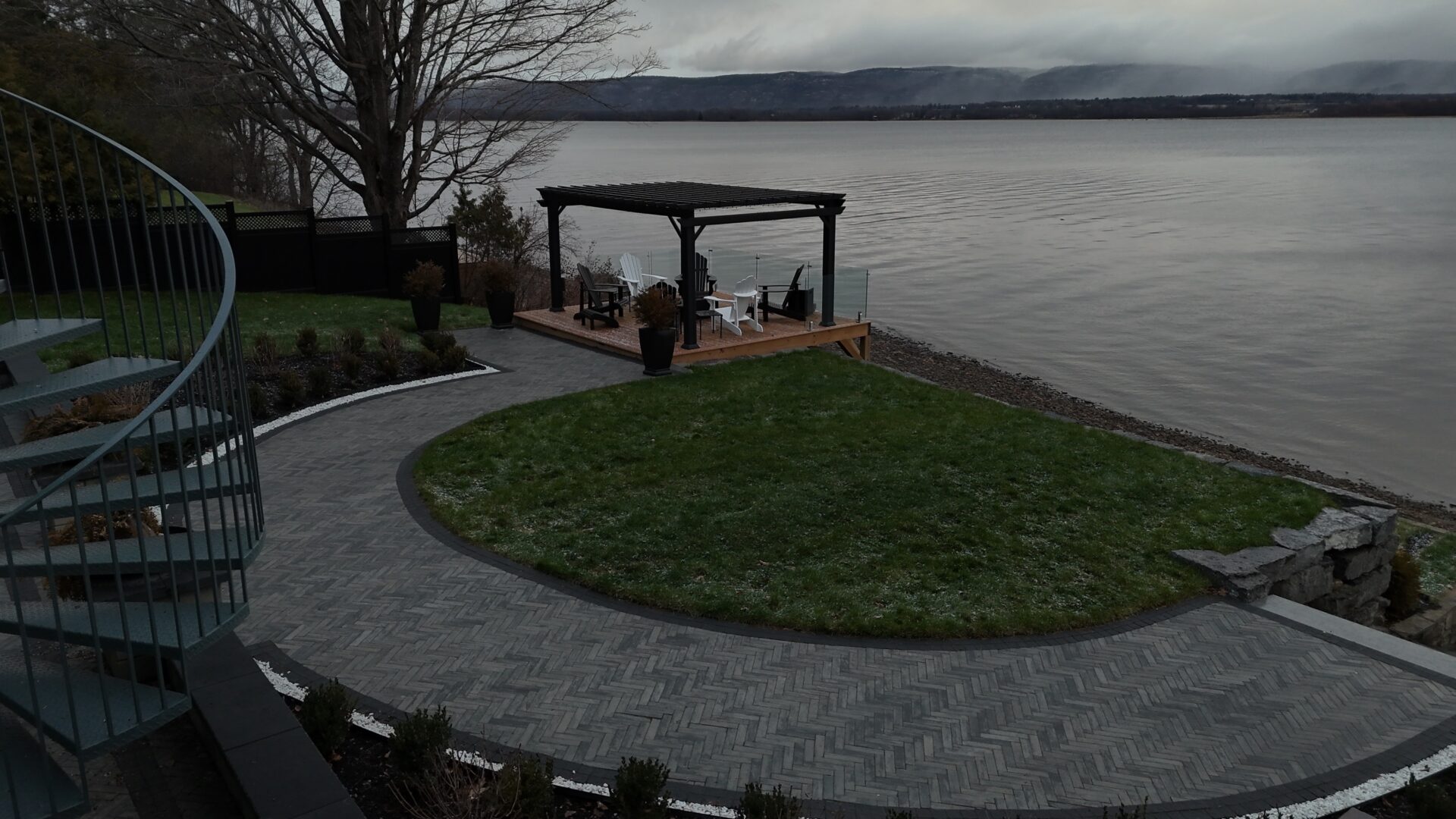
Ottawa’s outdoor season is relatively short, which makes every design decision count. From late spring through early fall, homeowners contend with hot, humid afternoons, sudden summer thunderstorms, and long evenings that make outdoor living one of the most valuable extensions of the home. The right shade structure can transform how often a space is used. The wrong one can leave a beautifully built patio sitting empty during the very months it was designed to enjoy.
At WLS Landscaping, the question of pergola versus covered patio is one we explore frequently during the planning phase of outdoor living projects. Whether we’re designing a backyard retreat in Westboro, enhancing a property in Island Park, or creating a complete outdoor living space in Kanata Lakes, the conversation is never simply about appearance. For homeowners considering pergola installation Ottawa, the real decision comes down to how the space will function, how it responds to Ottawa’s climate, and how it fits into the overall landscape design. Here’s how we help clients evaluate the options.
What each structure actually does and doesn’t do
The pergola
A pergola is an open overhead structure typically a series of beams and rafters that defines outdoor space without fully enclosing it. It provides filtered light, partial shade, and a clear architectural identity for a patio or garden area. On a bright afternoon in July, a pergola with a fabric canopy or dense overhead planting can meaningfully cut the heat.
What a pergola does not provide is shelter from rain. In a downpour, you’re going inside. That single limitation shapes how much of Ottawa’s summer a pergola can actually serve.
The covered patio
A covered patio whether attached to the home’s roofline or built as a freestanding structure provides a genuine weatherproof roof. That changes how the space gets used entirely. A covered patio turns a summer storm from an interruption into atmosphere. You can be outside on a rainy Tuesday evening in August. You can host without watching the radar.
The tradeoff is that a solid roof is a more significant structure, with corresponding implications for cost, permitting, and how it integrates with the home’s architecture.
Neither is categorically better
They do different things. The right choice depends on what you’re actually asking the space to do and how much of Ottawa’s unpredictable summer you want to be able to use it.
How Ottawa’s climate should influence your decision
Snow load and year-round structures
If you’re planning a structure that stays up year-round, snow load matters. Ottawa regularly sees substantial accumulations through the winter, and a covered patio with a solid roof needs to be engineered to handle that weight safely. A pergola with open rafters sheds snow naturally there’s nothing for it to accumulate on. A fabric canopy, if left up through winter, will fail under load. These aren’t hypotheticals; they’re standard engineering considerations in any proper design-build process.
July heat and summer storms
In the peak of summer, both structures have real value. July and August in Ottawa bring genuine humidity, and the benefit of shaded outdoor space whether filtered through a pergola or sheltered under a solid roof is tangible. The covered patio has a clear advantage on the many summer days when afternoon storms are likely, which in Ottawa means a significant portion of the season.
Permits and Ontario Building Code
Permit requirements apply to both structure types, though the specifics depend on size, proximity to the house, and whether the structure is attached or freestanding. An attached covered structure that connects to the home’s roofline will have different structural and permit requirements than a freestanding pergola. Navigating this from the start before design work is finalised is one of the practical advantages of working with a design-build team that handles pergola installation in Ottawa regularly.
How your property and home architecture shape the right choice
Yard orientation and existing canopy
A mature rear garden in New Edinburgh, with existing tree coverage and a yard that benefits from filtered light, may be exactly the right setting for a well-designed pergola. The structure adds definition and character without fighting the landscape and the dappled light that comes through open rafters suits a garden setting in a way a solid roof rarely does.
Exposure and storm patterns
A west-facing backyard in Manotick is a different situation entirely. Full afternoon sun, no overhead canopy, and summer storms that tend to move quickly from the southwest that property is asking for real shelter. A covered patio makes the space usable for far more of the season than a pergola would, and the investment is justified by how often it gets used.
Home architecture and integration
An attached covered structure needs to relate to the existing roofline in a way that reads as intentional. That requires both a design eye and a structural understanding of the home. A freestanding structure whether pergola or covered has more flexibility, but it still needs to be proportionate and complementary to the house it sits beside. These are design problems, not product decisions, and they’re best worked through before a single post is set.
Integrating the structure into a full outdoor living design
The pergola or covered patio decision doesn’t sit in isolation. It’s one part of a broader outdoor living design and the best outcomes come from treating it that way.
The material beneath the structure, the lighting plan, the relationship to an outdoor kitchen or fire feature these decisions all connect. A pergola calls for a different lighting approach than a covered structure. A covered patio creates the conditions for a proper outdoor kitchen in a way an open-air pergola doesn’t. Getting these elements right means thinking about them together, in the design phase, not separately after the fact.
This is where the design-build model earns its value. When the pergola installation is designed alongside the patio surface, the lighting, and any other outdoor living features, the result is a space that works as a whole not a sequence of separate decisions bolted together.
The right answer depends on your space and how you use it
There is no universal answer to the pergola versus covered patio question. The right choice depends on how you actually use your outdoor space, what your property demands in terms of sun exposure and shelter, and what the broader design calls for. A homeowner in one part of Ottawa may arrive at a completely different answer than their neighbour three streets over and both answers can be correct.
What we’d caution against is making this decision in isolation, or treating it as a product choice before the design work has been done. The structure you choose sets the character and the usability of the entire outdoor space. It’s worth a proper conversation before anything else moves forward.
If you’re planning an outdoor living space for your Ottawa home and working through decisions like this one, we’d love to hear about your vision. We take on a limited number of projects each season start a conversation with our team and we’ll help you understand what’s possible for your property.