
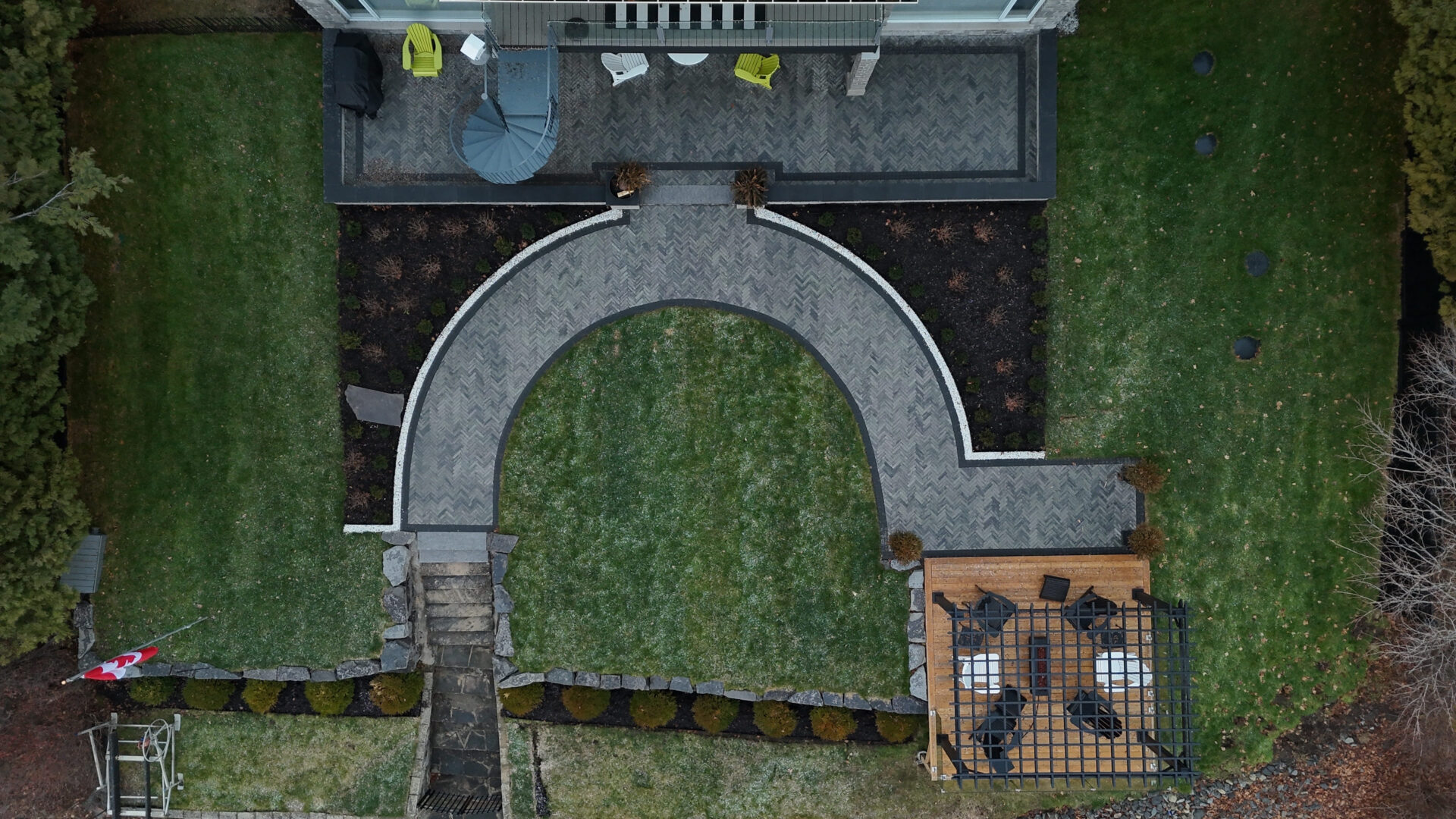
When we build a retaining wall Ottawa homeowners can rely on for decades, we spend as much time thinking about winter as we do the finished appearance. Ottawa’s climate places unique demands on retaining structures. Freeze-thaw cycles, seasonal moisture changes, and the behaviour of local Leda clay soils can create significant pressure beneath and behind a wall. What appears stable in summer can be tested repeatedly once winter arrives.
Across neighbourhoods such as Manotick and Rockcliffe Park, retaining walls often play an essential role in managing grade changes, creating usable outdoor space, and protecting landscapes from erosion. In our experience, the long-term performance of a retaining wall is determined long before the first winter arrives. The decisions made during design, engineering, drainage planning, and construction ultimately determine how a wall performs ten or twenty years later.
Why Ottawa Winters Are Particularly Hard on Retaining Walls
The Freeze-Thaw Cycle Never Stops Working
One of the greatest challenges for any retaining wall Ottawa property owners install is the repeated freeze-thaw cycle. Water naturally finds its way into soil and small voids around a structure. As temperatures drop, that water freezes and expands. When temperatures rise, it thaws and contracts.
This cycle repeats throughout the winter and early spring, placing continuous stress on both the surrounding soil and the retaining wall itself. Over time, even small movements can accumulate, particularly when the wall was not designed with Ottawa’s climate in mind.
Leda Clay Creates Additional Challenges
Many areas throughout Ottawa contain Leda clay soils, which behave differently from standard granular fill materials. These soils can become highly sensitive to moisture fluctuations and seasonal movement.
When moisture levels change and winter conditions arrive, clay soils may expand, contract, or shift in ways that place additional pressure on retaining structures. Properties throughout established neighbourhoods often require careful evaluation to ensure retaining walls are designed to account for these local soil conditions.
Hydrostatic Pressure Builds Behind Poorly Drained Walls
Water is often the hidden force responsible for retaining wall failures.
When drainage is inadequate, water can accumulate behind a wall. As the soil becomes saturated, hydrostatic pressure increases. During winter, frozen ground can further restrict water movement, intensifying the pressure acting on the structure.
Over multiple winters, this pressure can lead to movement, cracking, bulging, or even structural failure. Many retaining wall problems we encounter can ultimately be traced back to insufficient drainage planning during construction.
Small Issues Become Larger Problems Over Time
A retaining wall rarely fails overnight.
Instead, years of seasonal movement gradually compound existing weaknesses. A wall that appears stable after its first winter may begin showing subtle signs of movement after several seasons. The cumulative effects of Ottawa’s climate often reveal deficiencies that were present from the beginning but remained hidden for years.
What Proper Retaining Wall Construction Looks Like and Why It Matters
A Stable Foundation Starts Below Grade
The visible portion of a retaining wall represents only part of the structure. Much of its long-term stability depends on what lies beneath the surface.
Proper excavation, base preparation, and depth considerations help create a stable foundation capable of resisting seasonal movement. When these elements are overlooked, even high-quality materials may struggle to perform over time.
For homeowners evaluating a retaining wall proposal, understanding the importance of foundation preparation is essential.
Drainage Is Just as Important as the Wall Itself
A well-built retaining wall includes a proper drainage plan.
Drainage aggregate placed behind the wall helps direct water away from the structure. Weeping tile systems further assist by managing subsurface water and reducing pressure buildup. Together, these components help prevent moisture accumulation and minimise hydrostatic pressure throughout the year.
When reviewing plans for a retaining wall project, drainage should be discussed as thoroughly as the wall materials themselves.
Proper Batter Improves Long-Term Stability
Most retaining walls are intentionally constructed with a slight backward lean, often referred to as batter.
This design approach helps the wall resist soil pressure and improves overall structural stability. While subtle in appearance, proper batter can play a significant role in helping a wall withstand the forces generated by Ottawa’s freeze-thaw cycles and changing soil conditions.
Cap Installation Protects the Structure
The finishing details of a retaining wall are more important than many homeowners realise.
Properly installed caps help protect the wall from water infiltration, weather exposure, and premature deterioration. In addition to creating a clean, finished appearance, they contribute to the overall durability and longevity of the structure.
For homeowners investing in a premium landscape, these details can have a meaningful impact on performance over time. If you’re considering a new retaining wall or would like an assessment of an existing structure, contact us to arrange a consultation with our experienced team.
Retaining Wall Ottawa Warning Signs Homeowners Should Know
Cracking or Separation
Small cracks can sometimes indicate normal settling, but widening cracks or visible separation between wall components deserve attention.
These changes may suggest movement within the wall system or shifting conditions beneath the structure.
Bulging or Leaning
A wall that begins to bow outward or lean forward is often experiencing increased pressure from behind.
This can be caused by drainage issues, soil movement, or structural deficiencies. Addressing these concerns early is typically far less disruptive than waiting until extensive repairs become necessary.
Poor Drainage Performance
Standing water near the base of a retaining wall or persistent wet areas behind the structure may indicate drainage problems.
Because water management plays such a critical role in wall performance, drainage issues should never be ignored.
Movement Around Adjacent Hardscapes
On properties throughout neighbourhoods such as The Glebe and New Edinburgh, older retaining walls are often integrated with patios, walkways, gardens, and other landscape features.
When these surrounding elements begin shifting, settling, or separating, the retaining wall may be contributing to the movement. Observing changes in nearby hardscape features can provide valuable clues about the condition of the wall itself.
How the Design-Build Process Protects Your Investment From the Start
A retaining wall should never be viewed as an isolated landscape feature. It is a structural component that influences drainage, grading, usability, and the overall performance of the property.
Our design-build approach allows us to evaluate these factors as part of a complete landscape plan. Through detailed planning, 3D design visualisation, site analysis, and experienced construction practices, we create retaining walls that are designed specifically for Ottawa conditions.
Whether a retaining wall is supporting a new outdoor living area or helping manage significant grade changes, integrating design and construction from the outset creates better long-term outcomes.
Homeowners considering a retaining wall project can learn more through our Retaining Wall Services page and explore how walls integrate with broader Landscape Design Services to create cohesive outdoor environments.
By addressing drainage, grading, aesthetics, and structural considerations together, we help ensure that every element works as intended through Ottawa’s changing seasons.
Conclusion
When it comes to retaining walls, winter performance is determined long before snow arrives. The decisions made during design, site preparation, drainage planning, and construction have a lasting impact on how a wall performs through Ottawa’s freeze-thaw cycles and challenging soil conditions.
A retaining wall that remains stable after years of winter exposure is rarely the result of luck. It is the result of thoughtful planning, quality materials, and experienced execution from the very beginning.
If you’re considering a retaining wall for your Ottawa property, or you have an existing structure you’re concerned about, we’d welcome a conversation. We take on a limited number of projects each season. Start a conversation with our team and we’ll help you understand what’s possible for your property.