
Interlock handles Ottawa winters well when it’s built on a proper base. What wears it down faster is usually what happens on top of it: the wrong de-icer, a metal shovel blade, a plow that catches the border, or meltwater that freezes in the same spot every night. A few habits from November to April keep pavers, joints and edges in good shape for the long run.
Here’s how we’d look after interlock patios, walkways and driveways through an Ottawa winter, and what to check once the snow is gone.
Why winter is hard on interlock
Ottawa swings above and below freezing many times a season. Water gets into joints and the top layer of the base, freezes, expands, then thaws and drains again. On a well-built install with good drainage that cycle does very little. Where water sits, or where the joints have washed out, it can loosen pavers and let the surface move.
Then there’s everything we put on the surface to keep it safe: salt, sand, shovels, snow blowers and plows. None of them have to be a problem. They just need to be used with the stone in mind.
Before the first big snow
- Top up the joints. Look for gaps where the jointing sand has washed out, especially near downspouts and along edges. Full joints keep pavers locked together and shed more water.
- Mark the edges. Put snow stakes along driveway borders, walkway edges and any step or wall you don’t want a blade to find. Do it before the ground freezes, while the stakes still go in easily.
- Check where the downspouts go. A downspout that empties onto a walkway or patio will make ice there all winter. Point it at a bed or lawn that slopes away from the house.
- Plan where the snow goes. Pick a spot on the lawn for the pile, away from patio edges, walls and your best shrubs. Salty snow piled on cedars and garden beds is hard on the plants come spring.
Choosing a de-icer for interlock
Every paver maker publishes its own care advice, so start with the guide for the product you have. If you don’t know what was installed, ask whoever built it. A few rules hold for almost any interlock:
- Use less than you think. De-icer works best on a thin layer of ice after you’ve shovelled. Heaping it on doesn’t melt more, it just leaves more residue to soak into the surface and joints.
- Go easy on rock salt. It’s easy to find, but heavy use speeds up wear on most paver and stone surfaces and leaves a white crust. It also slows right down in deep cold.
- Never use fertilizer-based de-icers. Products with ammonium nitrate or ammonium sulphate attack concrete and shouldn’t go anywhere near pavers.
- Sand is your friend for grip. Coarse sand or grit gives traction without any chemistry. Sweep it up in spring so it doesn’t get tracked inside or fill the drains.
Natural stone needs even more care than concrete pavers. If you have a flagstone or slab patio, our natural stone winter care guide covers it in detail.
Shovels, snow blowers and plows
Most winter scratches and chipped edges come from equipment, not weather.
Shovels. Use a plastic shovel or one with a poly or rubber edge. Skip metal ice choppers and scrapers on pavers; they chip the surface and the edges of each unit.
Snow blowers. Set the skid shoes so the scraper bar rides a little above the surface instead of dragging on it. Slightly raised pavers or a lifted edge will catch a blade set too low.
Plow contractors. If someone clears your driveway, talk to them before the season starts. Ask whether they can use a rubber or poly cutting edge or raise the blade a touch on interlock, show them where the borders and edges are, and make sure the stakes are out. Most plow damage happens at the edges, where the blade drops off the paving and catches the border or the lawn.

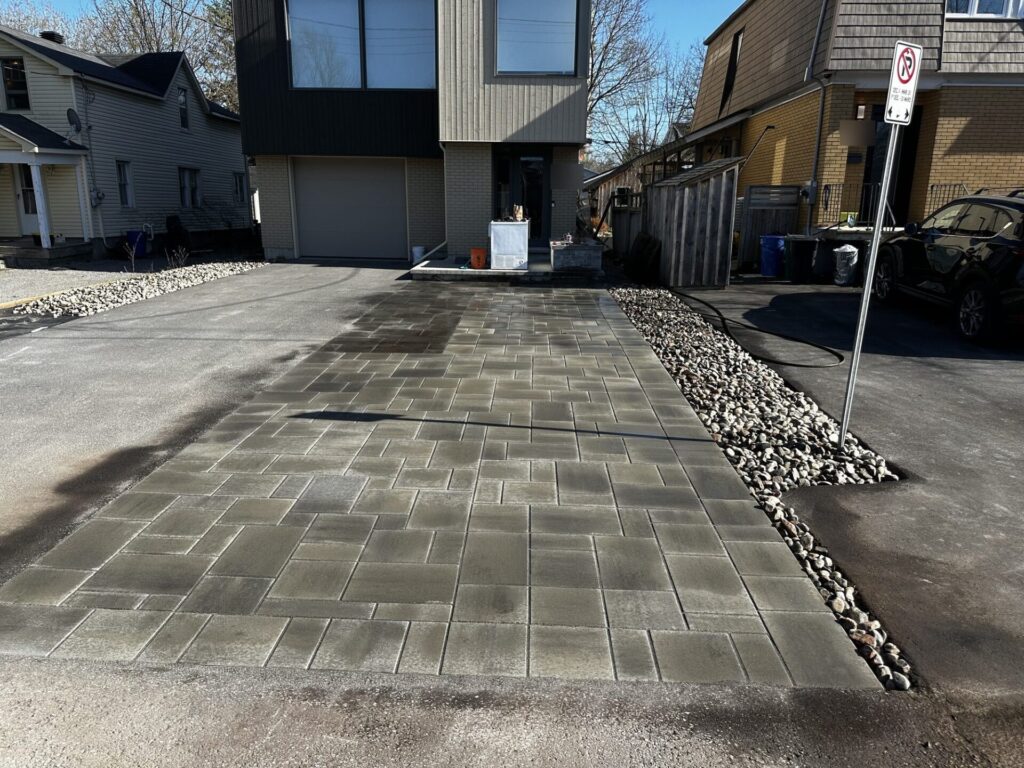
Interlock borders like the ones above look sharp and take more abuse than the middle of the driveway. They’re exactly where a stake or two pays for itself.
During the winter
- Shovel early and often. Snow that gets packed down by cars and boots turns to ice, which means more de-icer and more scraping.
- Watch the melt spots. If one area ices up again every night, look at where the water’s coming from: a downspout, a roof edge or snow piled uphill. Fixing the source beats salting the same patch for four months.
- Don’t chip at thick ice. Spread a bit of de-icer or sand and let it soften. Hacking at it with a metal tool will mark the pavers.
What to check in spring
Once the snow’s gone and the ground has thawed, walk your patio, walkways and driveway and look for:
- White haze. A white film on pavers is often efflorescence, a natural mineral bloom in concrete that usually fades with time and rain. Salt residue looks similar. Rinse with a hose and gentle scrub before reaching for any cleaner, and follow the paver maker’s advice if it stays.
- Empty joints. Winter melt and sweeping can pull out jointing sand. Refill it so the pavers stay locked.
- Settled or lifted spots. A little movement over winter can settle back once the ground thaws. Areas that stay low, hold puddles or keep rising year after year usually point at the base or drainage underneath, not the pavers themselves.
- Chipped or loose edges. Check borders and edge restraints, especially along the driveway and anywhere a plow or snow blower went.
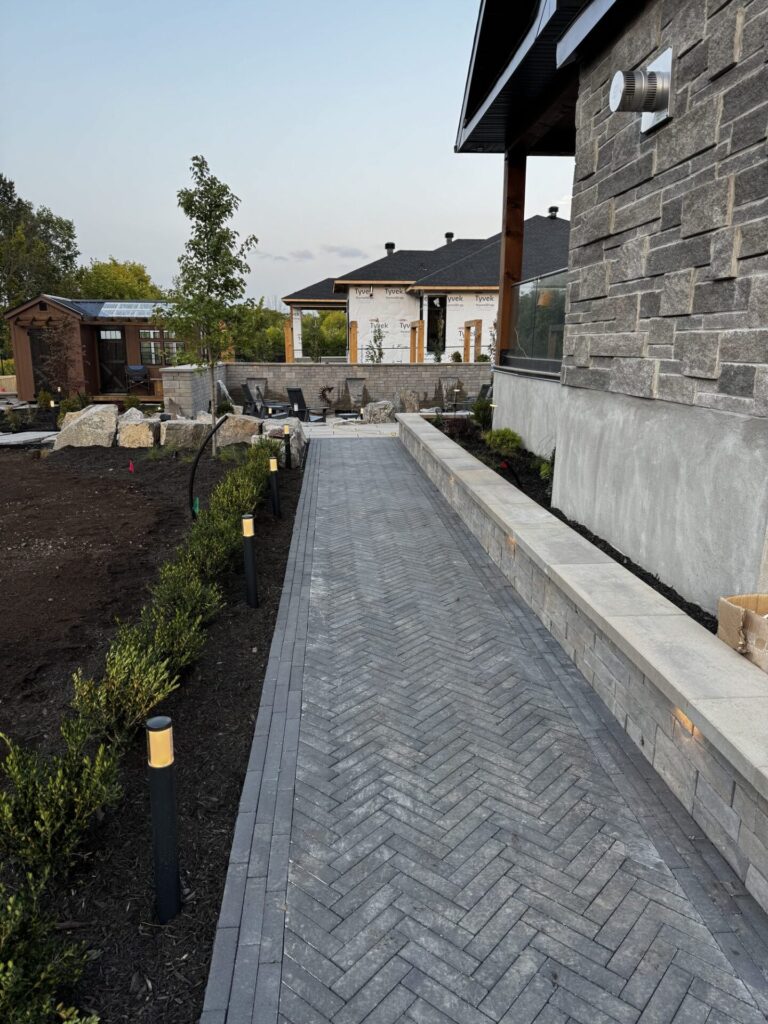
One nice thing about interlock: when a section does settle or a unit gets damaged, it can be lifted, the base corrected and the same pavers relaid. That’s a lot easier than patching poured concrete. If a patio or walkway keeps moving every spring, it’s worth having the base looked at. Our interlock patio page covers how we approach new patios, and the same thinking goes into our interlock driveways.
Planning new interlock, or wondering whether what you have is worth fixing? Tell us about your project and we’ll take a look.
Frequently asked questions
Can you put salt on interlock?
You can, but use as little as possible and check your paver maker’s care guide first. Heavy rock salt speeds up surface wear and leaves residue. Shovel first, use a light amount of de-icer on what’s left, and use sand for grip. Never use de-icers that contain ammonium nitrate or ammonium sulphate.
Will a snow blower damage interlock pavers?
Not if it’s set up right. Raise the skid shoes so the scraper bar rides just above the surface. A blade set too low will catch slightly raised pavers and edges and chip them.
Why are my pavers white after winter?
It’s usually efflorescence, a natural mineral bloom in concrete, or salt residue. Both often fade with rain and a light scrub. If it hangs on, use a cleaner the paver maker recommends rather than a strong acid.
Is it normal for interlock to move in winter?
A little seasonal movement can happen, and it often settles back after the thaw. Spots that stay sunken, hold water or lift more each year usually mean a base or drainage problem worth fixing.
How do I stop a plow from damaging my interlock driveway?
Stake the edges before the ground freezes, walk the driveway with your plow contractor before the season, and ask about a rubber or poly cutting edge or a slightly raised blade. Most damage happens at the borders, so that’s where to focus.