
Most pool projects start with the pool. The shape gets picked, the deposit goes down, the excavator gets booked, and the landscaping gets figured out later.
That order is the reason so many pool yards end up with pavers sinking toward the water, a fence in the wrong spot and a patio that floods every time it rains. The pool is one piece of the yard. Where it sits decides the grades, the drainage, the access and the budget for everything around it.
If you’re thinking about a pool for next season, here’s what’s worth deciding before anyone digs.
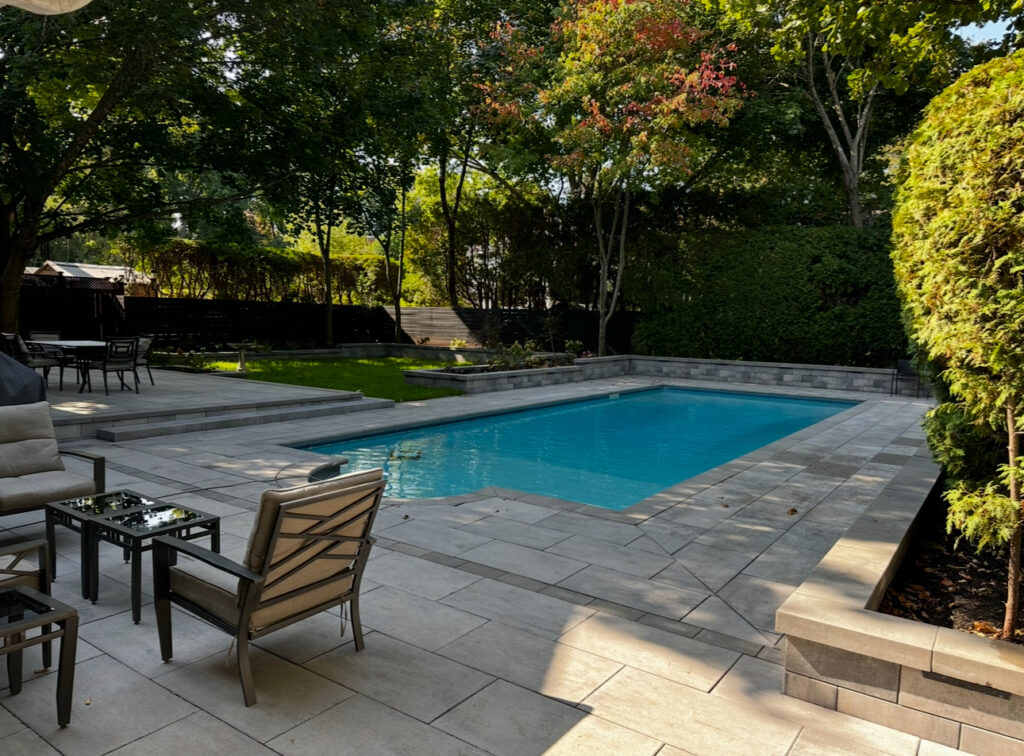
Design the whole yard first, then place the pool
A pool builder’s job is the pool. They’ll put it where it’s easiest to build, which isn’t always where it works best for the rest of the yard.
Before the location is locked in, you want answers to a few questions. Where does the sun sit at four in the afternoon in July? How do people walk from the back door to the water? Where does the equipment go so you don’t hear the pump from the patio? Where’s the dining area, and is there any lawn left?
A proper landscape design answers those on paper, with the pool, patio, fence, planting and lighting drawn together. It costs far less to move a pool on a drawing than to live with it ten feet from where it should’ve been.
Think about machine access before it’s gone
Pools need big machines, and so does the stonework around them. Once the pool is in and the fence is up, access to the backyard shrinks to the width of a gate.
That’s why the order of work matters. Excavation, the pool itself, rough grading, base preparation and any walls should be planned as one sequence, with the fence and the planting going in last. If the pool company and the landscaper never talk, somebody ends up moving stone by wheelbarrow, and you pay for the extra days.
The ground around a new pool settles
This is the one that catches people. To build a pool, the hole is dug wider than the pool. That extra space gets filled back in afterward. If the fill isn’t placed and compacted properly, it settles, and in Ottawa it settles faster, because freeze-thaw cycles and clay soils work on loose ground every winter.
Lay a patio on top of that too soon and the edge nearest the pool drops within a couple of seasons. You get lips at the coping, puddles on the deck and joints that open up.
There are two honest ways to handle it. The fill around the pool can be built up in thin layers of clear stone and compacted at each one, or the area can be left to settle through a winter before the paving goes down. Either works. Skipping both doesn’t. Ask whoever’s building your pool exactly what goes back in around it, and get the answer in writing.
Grading and drainage come before stone
A pool deck is a large hard surface, and all the rain that lands on it has to go somewhere. It can’t run into the pool, and it can’t run back toward the house.
The deck needs a consistent, gentle slope away from both, and the water needs a destination: a lawn that can take it, a planting bed or a drain. On the heavy clay found in much of Ottawa, water soaks in slowly, so “it’ll drain into the grass” isn’t always a plan.
Sloped yards add another layer. If the pool has to sit level on a lot that isn’t, you’ll likely need a retaining wall on the high side, the low side or both. That wall has to be designed with the pool, not squeezed in after.
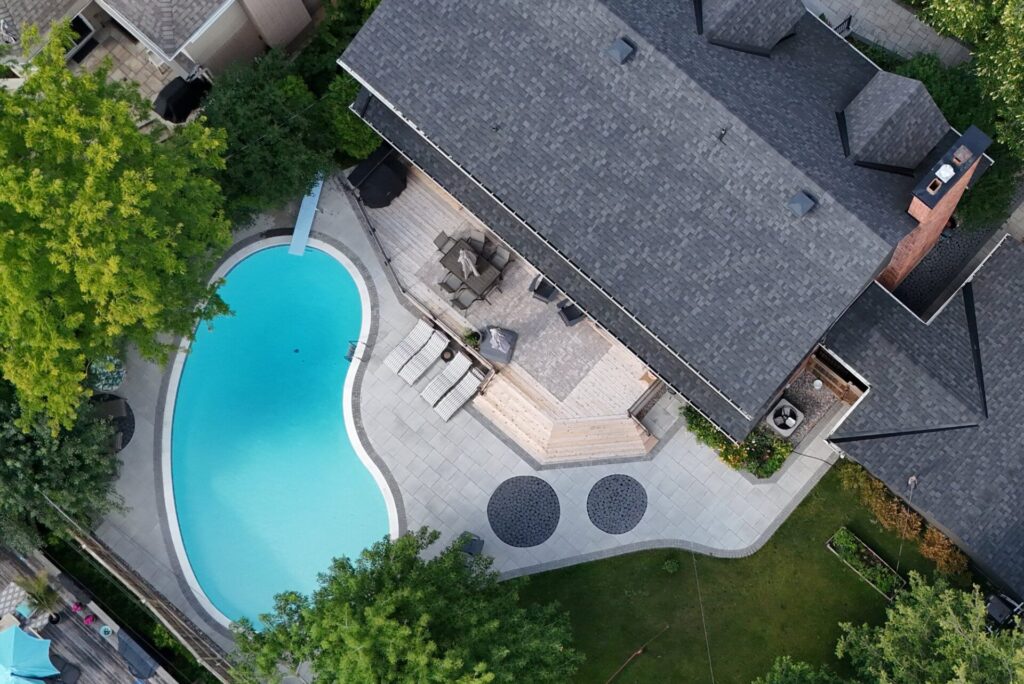
Choosing the surface around the pool
Whatever goes around the pool gets judged barefoot. Three things matter more here than anywhere else in the yard.
Grip comes first. Some stone and some finishes get slick when they’re wet, so ask to see and feel a sample with water on it.
Heat is next. Dark surfaces get hot in full July sun, and lighter colours stay noticeably cooler underfoot.
Then there’s salt. If you’re going with a salt water system, pick a material that’s rated for it, and seal it if the manufacturer recommends that.
An interlock patio is a popular choice around Ottawa pools for a practical reason. Pavers and large-format slabs sit on a flexible base, so they move with the frost instead of cracking, and a section can be lifted and re-levelled if something ever shifts. Poured concrete usually costs less up front, but when it cracks, it stays cracked.
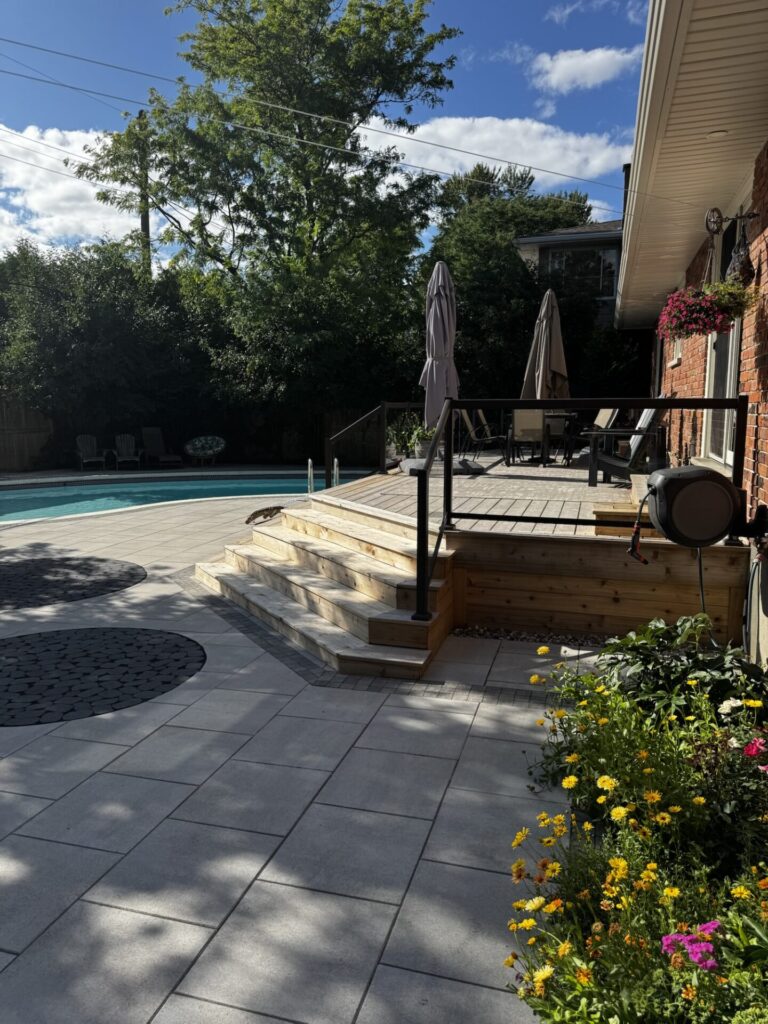
The City of Ottawa’s fence rules shape the design
In Ottawa, you need a pool enclosure permit for any pool, hot tub or pond that can hold 600 mm (24 inches) of water or more. The enclosure has to be at least 1.5 metres (5 feet) high, every gate has to be self-closing, self-latching and lockable, and the enclosure has to be inspected before the pool is filled. A hot tub with a locking safety cover is exempt from the fence and gate rules, but it still needs the permit. The City lays out the details on its pool enclosures page.
The fence isn’t an afterthought. Where it runs decides how the yard feels, where the gates land and what you look at from the patio. Draw it into the design from day one, so it reads as part of the yard and not a cage around it.
When to start planning
The building season here runs from about April through November, and pool builders and landscapers fill their spring calendars over the winter.
For us, it usually takes around eight weeks to go from a first conversation to a finished plan and a signed contract. After that, projects are built in the order they’re signed. So a pool yard you want to swim in next summer is a conversation to have this fall or winter, not in May.
We take on a limited number of projects each season, and we’d sooner tell you honestly where you’d land in the schedule than promise a date we can’t keep.
If you’re planning a pool, or you’ve got one going in and nobody’s talked about the yard around it yet, get in touch and we’ll walk you through how we’d approach it.
Common questions about pool landscaping in Ottawa
Should the pool or the landscaping go in first?
The pool goes in first, but the landscape design should be finished before the pool is dug. The design sets the pool’s position, the finished grades and the order of work, so the two crews aren’t undoing each other’s work.
How long after a pool is installed can you lay a patio around it?
It depends on how the ground around the pool was filled back in. If it was built up in compacted layers of clear stone, paving can usually follow soon after. If it was filled with loose soil, it’s safer to let it settle through a winter first.
Do I need a permit for a pool fence in Ottawa?
Yes. The City of Ottawa requires a pool enclosure permit for any pool, hot tub or pond that can hold 600 mm (24 inches) of water or more. The enclosure has to be at least 1.5 metres high with self-closing, self-latching, lockable gates, and it’s inspected before the pool is filled.
What’s the best material for a pool deck in Ottawa?
Something with good grip when it’s wet, a lighter colour that stays cooler in the sun, and a base that can handle frost. Pavers and large-format slabs on a properly built base cover all three, and they can be re-levelled if the ground moves.
When should I book pool landscaping for next summer?
Fall or winter. Design and planning take a couple of months, and spring build schedules tend to fill over the winter.