
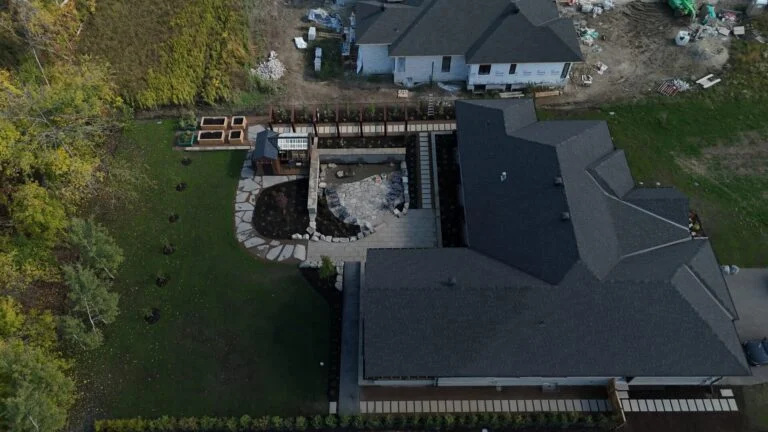
Choosing a patio material is one of the bigger decisions in any backyard project. Flagstone and interlock are two of the most common options in Ottawa, and each comes with its own look, cost, and maintenance needs. Understanding the differences before starting a project helps avoid surprises once installation begins.
This guide compares both materials across the factors that matter most for Ottawa homeowners, including how each holds up through the region’s freeze and thaw cycles.
What Is a Flagstone Patio
Flagstone refers to natural stone, typically limestone or sandstone, cut into irregular or semi regular pieces. It is laid either with tight joints filled with sand or polymeric sand, or with wider joints planted with low growing groundcover. The result is a more organic, natural looking surface that tends to suit gardens, older homes, and properties with a lot of existing landscaping.
What Is an Interlock Patio
Interlock, also called interlocking pavers, is made of manufactured concrete units that fit together in a set pattern. It comes in a wide range of colors, shapes, and textures, which gives more control over the final design. Because the units are uniform, interlock is often used for driveways, walkways, and patios where a clean, structured look is the goal.
Comparing Flagstone and Interlock
Both materials can perform well in an Ottawa backyard when installed correctly, but they differ in several practical ways.
| Factor | Flagstone | Interlock |
|---|---|---|
| Appearance | Natural, irregular, organic feel | Uniform, structured, wide design options |
| Cost | Generally higher due to material and labor | Generally lower, though premium styles cost more |
| Installation time | Longer, due to fitting irregular pieces | Faster, due to uniform units |
| Repair | Individual stones can be lifted and reset | Individual pavers can be swapped easily |
| Freeze thaw performance | Good with proper base and joint work | Good with proper base and edge restraints |
| Weed growth in joints | More likely with sand joints | Less likely with polymeric sand |
| Long term maintenance | Occasional joint refilling | Occasional sand replenishment and cleaning |
Neither material is universally better. The right choice depends on budget, the style of the home, and how much maintenance the homeowner is willing to take on.
Durability in Ottawa’s Climate
Ottawa winters bring repeated freezing and thawing, which puts stress on any hardscaping surface. Both flagstone and interlock can last for decades, but only if the base preparation is done properly. This typically includes:
- Excavating to an appropriate depth below the frost line
- Compacting a granular base in layers
- Sloping the surface slightly for drainage
- Using proper edge restraints to prevent shifting
Skipping any of these steps is one of the most common reasons patios heave, crack, or settle unevenly after a few winters, regardless of which material was used.
Maintenance Requirements
Flagstone with sand joints may need occasional weeding and joint refilling, particularly in the years after installation as the ground settles. Polymeric sand joints reduce this but still require periodic attention.
Interlock pavers generally need less joint maintenance if polymeric sand was used during installation, though the surface benefits from occasional cleaning and resealing to keep colors from fading. Individual pavers that shift or stain can usually be lifted and replaced without disturbing the rest of the patio, which is one of the practical advantages of the modular design.
Cost Considerations
Flagstone tends to cost more per square foot due to the price of natural stone and the additional labor required to fit irregular pieces together. Interlock is often more budget friendly at a base level, though premium textures, patterns, and borders can bring the cost closer to flagstone in some cases.
Getting quotes based on the actual square footage and design of a specific yard is the most accurate way to compare costs, since pricing can vary depending on site conditions, access, and design complexity. Homeowners planning a project can connect with WLS Landscaping to get a detailed estimate for their property.
Design Considerations for Ottawa Backyards
Beyond material choice, a few design factors affect how well a patio fits a backyard:
- Sun exposure and shade patterns through the day
- How the patio connects to existing walkways or garden beds
- Whether the space will include a fire pit, seating wall, or outdoor kitchen
- Drainage direction relative to the house foundation
Looking through examples of completed projects in a project gallery can help narrow down a style before committing to a final design, since photos often show how a material looks once installed rather than as a sample piece.
Which Option Fits Your Backyard
Flagstone tends to suit properties with a more natural or traditional landscape, particularly where the patio will sit near garden beds or mature trees. Interlock suits homeowners who want more control over pattern and color, or who are connecting the patio to a driveway or walkway using matching pavers.
Some properties also work well with a mix of both, using flagstone for a seating area and interlock for connecting pathways. A flagstone patio and walkway installation, for example, can be paired with interlock elsewhere on the same property depending on the layout.
Working With a Landscaping Company
Whichever material is chosen, the quality of installation has a bigger impact on long term performance than the material itself. A company familiar with Ottawa soil conditions and frost depth will plan the base work accordingly, which reduces the chance of cracking or shifting in future years. Homeowners can learn more about the full range of services offered by visiting the WLS Landscaping website before starting a project.
Frequently Asked Questions
Is flagstone more expensive than interlock in Ottawa?
Generally yes, due to the cost of natural stone and the additional labor needed to fit irregular pieces. Interlock is usually more budget friendly at a base level, though premium designs can narrow the gap.
Which material lasts longer in Ottawa’s climate?
Both can last for decades when installed with proper base preparation and drainage. The material itself matters less than how well the base was built to handle freeze and thaw cycles.
Can flagstone and interlock be combined in the same backyard?
Yes. Many properties use flagstone for patio or seating areas and interlock for walkways or driveway connections, which allows for both a natural look and a structured design in the same space.
Do interlock patios need to be resealed?
Sealing is optional but can help maintain color and reduce staining over time. It is not strictly required for the patio to function, but it does extend the appearance of a newer looking surface.
How do I know which material suits my yard?
It depends on the style of the home, existing landscaping, and budget. Reviewing completed projects and discussing the space with a landscaping company is the most reliable way to decide before installation begins.