
Retaining Walls in Manotick
Walls for bigger lots and steeper grades, planned around the river, the septic bed and the trees you'd like to keep.
- RVCA mapping checked before design
- Machines kept off septic beds and wells
- Roots protected around mature trees
- Built by our own crews
Slopes, Riverbanks and Bigger Grade Changes
Manotick lots usually have more grade to deal with than a city backyard: a long fall away from the house, a bank running down toward the Rideau, a walkout that needs the ground held back on both sides. Our retaining walls in Manotick turn that slope into ground you can use, and they're planned around what's already on the property. That means checking whether the lot falls in the conservation authority's regulated area, keeping our machines and stone off the septic bed, and digging carefully around the roots of the big trees.
Who We Serve
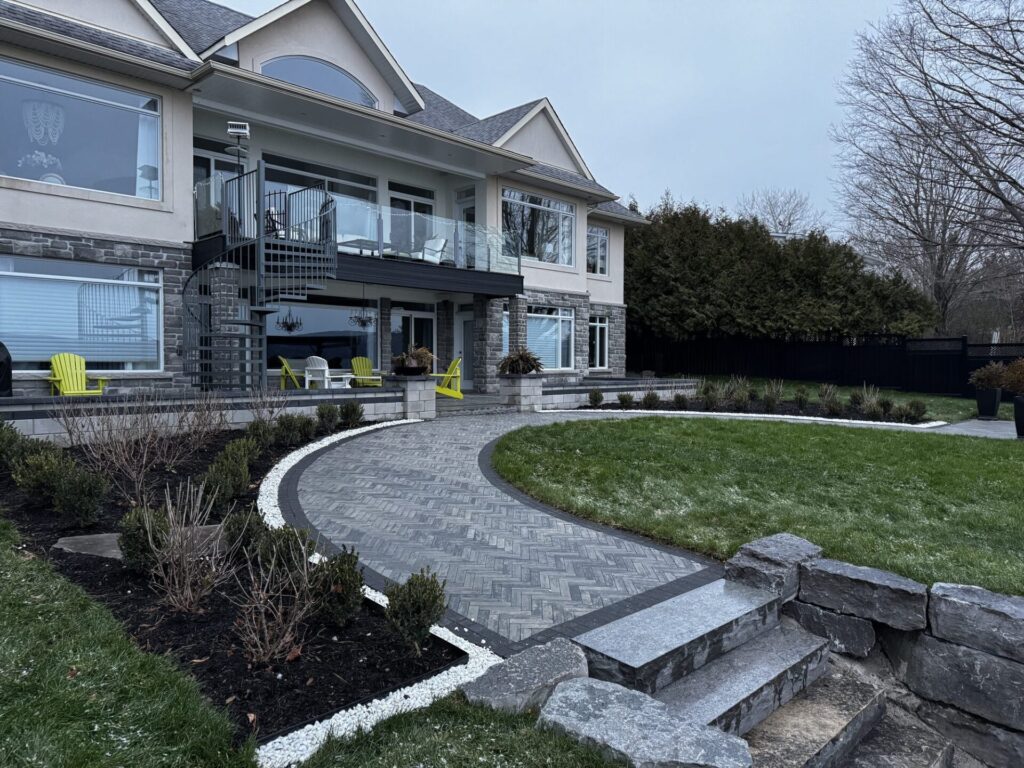
The walls we build here are for homeowners, in the old village and on the newer estate lots around it.
Residential
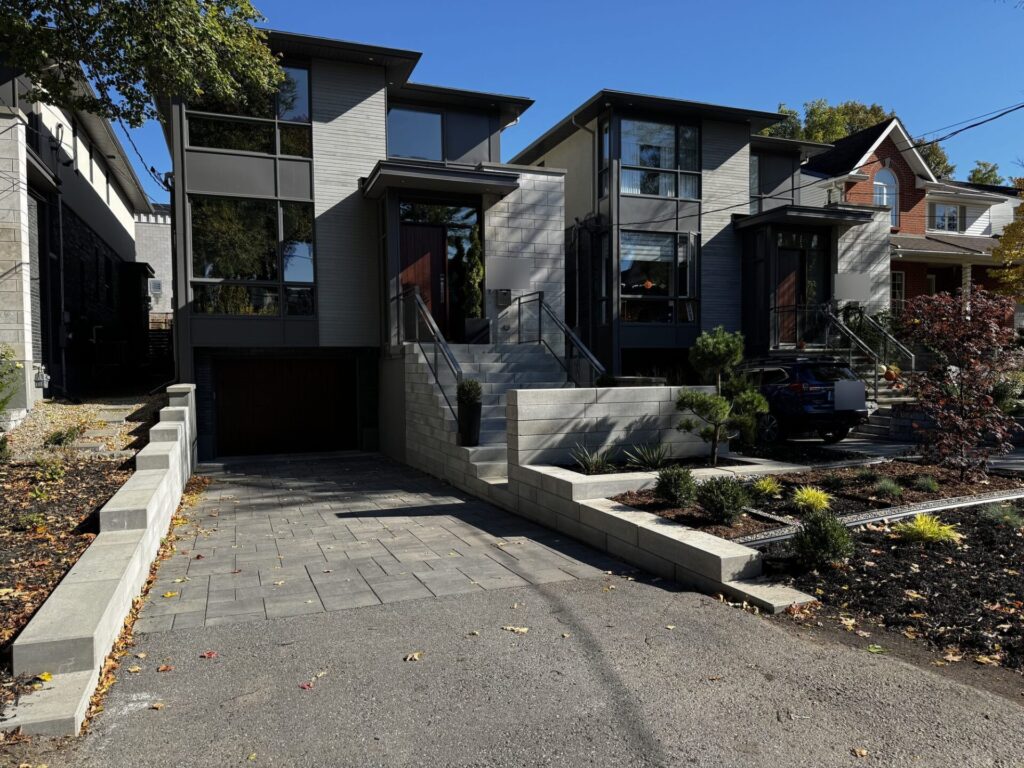
On a bigger lot there's usually more than one slope to deal with, and they're rarely where you'd want them. Here's where a wall tends to come in:
- Riverfront lots that drop toward the Rideau
- Estate lots that fall away gradually toward the back of the property
- Walkout basements cut into a hillside
- Village properties with an old timber or stone wall that's given up
- Yards where the septic bed, the well or a big tree limits where a wall can go
Our Retaining Wall Services
Three kinds of wall, all built on the same groundwork. Which one suits you comes down to height, look and cost.
Block Retaining Walls for Bigger Grades
A block retaining wall is usually the answer when there’s a lot of grade to hold. The blocks interlock row by row, and on taller walls geogrid goes into the backfill as the wall rises, laid out to the engineer’s design.
How we build it:
- A trench dug out below the topsoil and a base compacted in layers
- The first row set below finished grade, so the wall isn’t perched on the surface
- Clear stone backfill with a drain pipe at the bottom, and an outlet for the water
- Wide caps and block colours that suit a newer estate home
Natural Stone Retaining Walls
Big stone retaining walls look at home in Manotick, on a wooded lot or a bank above the water. A terraced stone wall can turn a steep slope into a set of planting beds. It costs more than block, and each stone is picked and placed one at a time, so it takes longer to build.
Why people pick it:
- Rough, natural faces that sit well under mature trees
- Gaps between stones for plants on a terraced slope
- A heavier, older look that suits the village’s older homes
- It pairs well with flagstone paths and natural stone steps
Garden and Terrace Walls
Some walls are more about shaping the yard than holding up a hill. A low natural retaining wall in Manotick might edge a bed under the big trees, square off a garden beside a long driveway, or wrap around the fire pit as seating. A short wall still gets a dug and compacted base, or the first winter starts pushing it out of line.
Where they fit:
- Raised beds that keep soil and mulch off the lawn
- Seating walls around a fire pit
- Terraced beds on a gradual slope
- Edges along long walkways and driveways
Benefits of Retaining Walls in Manotick
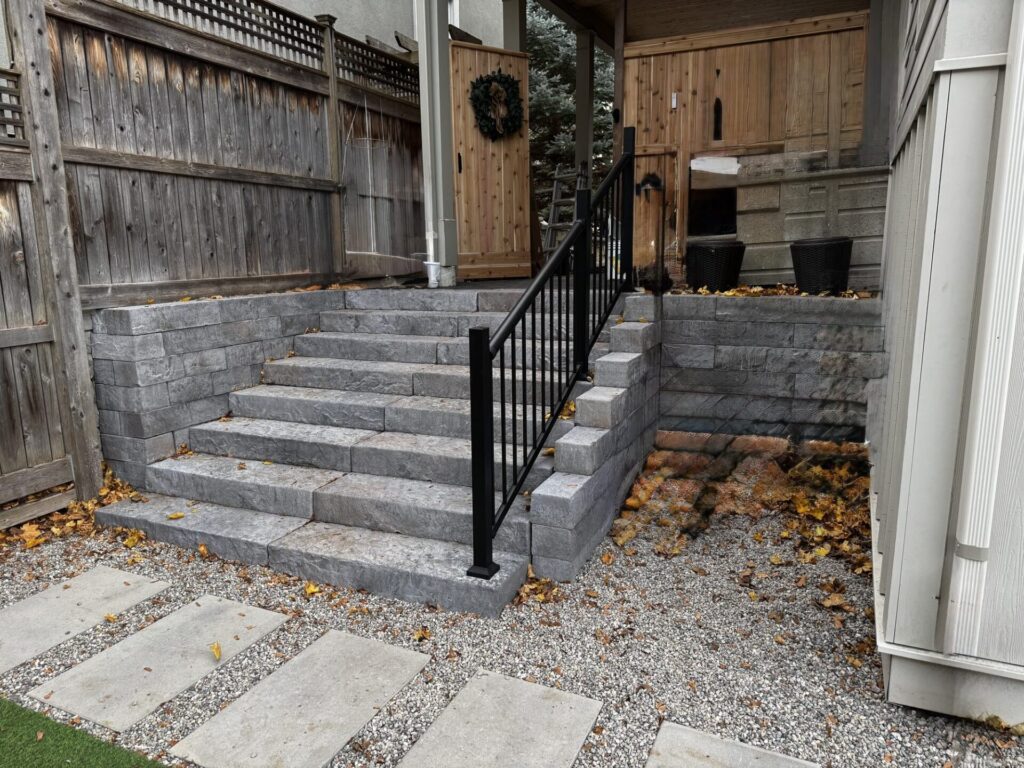
On a bigger lot, a wall in the right spot changes how much of the property you really use.
- More of the lot is usable. A bank that’s only good for mowing becomes a level lawn, a patio or a garden.
- Water has a way out. The pipe behind the wall takes water out and away, so it doesn’t sit behind the wall or run toward a walkout door.
- Banks stay put. On sloped and riverside lots, a wall built with the right permissions holds soil that would otherwise slump or wash out in the spring melt.
- The property looks planned. Walls give a big lot some structure and tie the patio, paths and gardens into one landscape design.
Our Retaining Wall Installation Process
On a Manotick lot the planning matters even more: RVCA mapping, the septic bed, the well and the trees all get checked before anyone digs.
- 1. Consultation: We walk the property with you, talk through how you want to use the space and set a realistic price range for your Manotick property. First conversations are with our team.
- 2. Design: Design takes 6 to 8 weeks. You get 3D renders, construction plans, building details and a planting list, with revisions until it feels right.
- 3. Build: We excavate, set a compacted base, build the wall with drainage stone behind it and backfill in layers. Our own crews do the work, with a dedicated project manager handling the schedule, materials and updates.
- 4. Warranty: Interlock and retaining walls come with a 3-year limited warranty, and we walk the finished space with you before we call it done.
More on how a project runs from start to finish and how design works with us.
Why Choose WLS Landscaping?
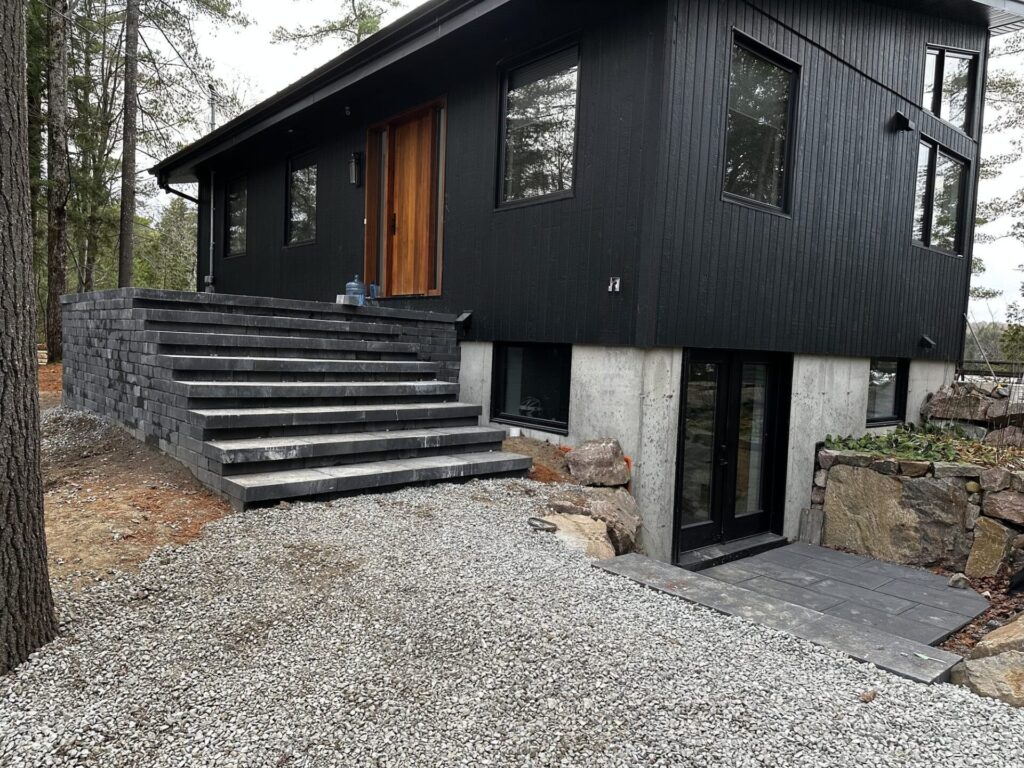
A wall on a big rural lot has more that can go wrong than one in a city backyard: more water, more grade, more buried things to stay away from. Here's how we handle it.
A Working Foreman on Every Wall
Our own crew builds your wall, and its foreman is on your job with the crew all day, not driving between sites. Bigger walls take longer, and keeping the same people on it for the whole build is what keeps the rows straight and the details consistent.
Careful Around the Septic and Well
A lot of Manotick homes run on a private well and septic. We find out where both are before we plan the wall, then keep the mini excavator, the stone piles and any new grades off the septic bed and away from the well.
RVCA Mapping Checked First
If your lot backs onto the river or sits low, part of it may be inside the Rideau Valley Conservation Authority’s regulated area, which covers floodplain, shoreline and steep slopes. Some work there needs RVCA permission under O. Reg. 41/24 before it starts. We check the mapping before we design, so the wall gets drawn for what’s allowed.
A Limited Number of Projects a Season
We only book so many projects a season. Our team is on the first call, and once the build’s booked, a dedicated project manager handles the schedule and the material orders, and you’ll get an update from them, usually twice a week.
Planning a Wall in Manotick?
Fill us in on what you're working with: the bank, the slope, the old wall that's giving up. If the lot's on the river or runs on a septic system, mention it, because those details shape the design. You'll get an honest read on what's involved, whether RVCA permission or a permit might come into it, and a realistic price range, all before you've paid a cent for design.
Frequently asked questions
Do I need RVCA permission for a retaining wall in Manotick?
Possibly. It depends whether the spot where the wall’s going is inside the RVCA’s regulated area, and we look that up on the mapping first. The Ontario Building Code also comes into it: once a wall’s exposed face is taller than 1 metre and it’s beside public property or the access to a building, it needs a permit and an engineered design. We check both before we price the wall.
Is natural stone a good choice for a Manotick retaining wall?
Often, yes. Natural stone and armour stone suit wooded lots and older village homes, and they hold a slope well when they’re set on a proper base with drainage behind them. They cost more than block and no stone is quite like the next, so it’s worth seeing both side by side before you decide.
What goes into building a block retaining wall?
In order: excavation, a compacted base, a buried first row, then the wall goes up with drainage stone and pipe behind it and geogrid where the height calls for it. Caps, final grading and cleanup finish it off. Our own crew does every step, and the last payment waits until you’ve walked the finished wall with us.
Can you build a wall near a septic bed, a well or big trees?
Yes, with some planning. We locate the septic bed and the well first and keep machines, stone and new grades clear of them. Around mature trees, we keep the digging out of the roots where we can and protect them where we can’t. Sometimes that means shifting the wall a few feet, and that’s usually the right call.
Will a new wall go with the stone and landscaping I already have?
We’ll pick block or stone with you to go with what’s already there. Colours vary between suppliers and batches, so an exact match to an older wall isn’t always possible. When it isn’t, we’ll tell you, and help you choose something that sits well beside it instead of a near miss.