
Interlock Driveways in Ottawa
Interlock driveways and driveway extensions across Ottawa, built on a base deep enough for daily traffic, plows, salt and a long freeze-thaw season.
- Base dug deeper than a patio
- City approvals checked first
- Water graded toward the street
- 3-year limited warranty on pavers
Interlock Driveway Contractors in Ottawa
We build interlock driveways in Ottawa for homeowners who are done patching asphalt every spring. A driveway works harder than anything else on the property. It carries your vehicles every day, takes a plow blade all winter and sits in salty slush from December to March, while the frost works at it from below. So we don't build it like a patio. The dig goes deeper, the base goes in heavier and gets compacted in layers, every edge is restrained and the whole surface is graded so water runs to the street, not toward the garage. Before any of that, we check what the City allows at your address, because the rules set the shape before you do.
Who Calls Us About Driveways
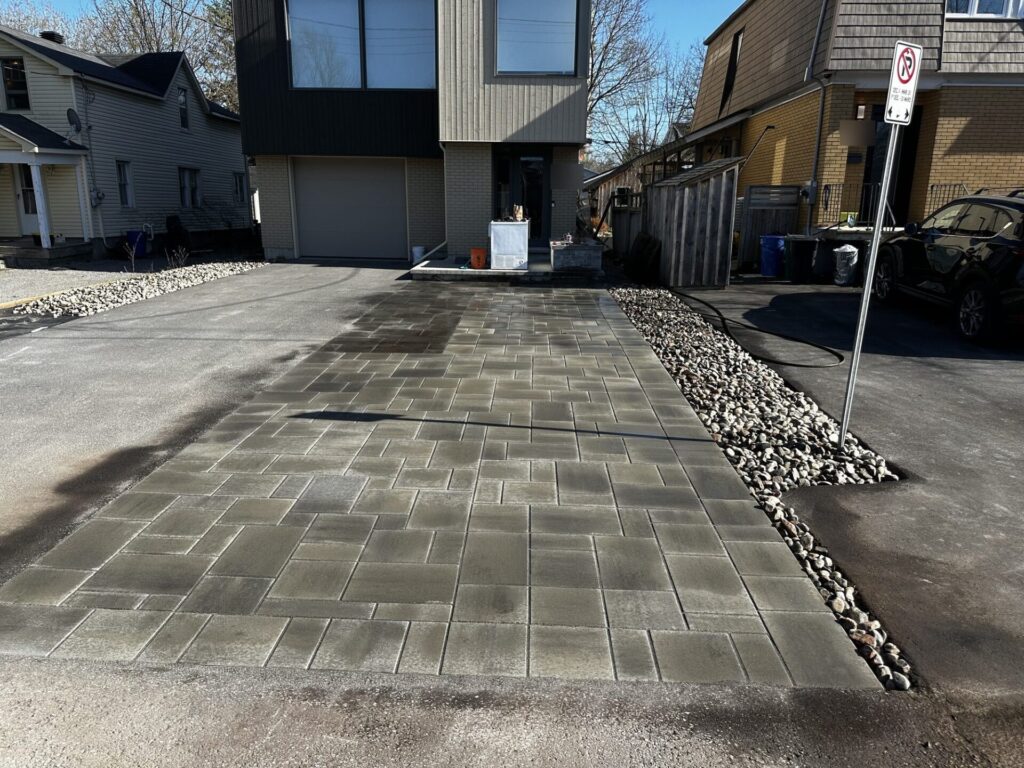
Driveway calls come from every part of the city, and the job looks different in each one. A narrow driveway beside an older home inside the Greenbelt has very little in common with a double driveway on a newer suburban street.
Residential
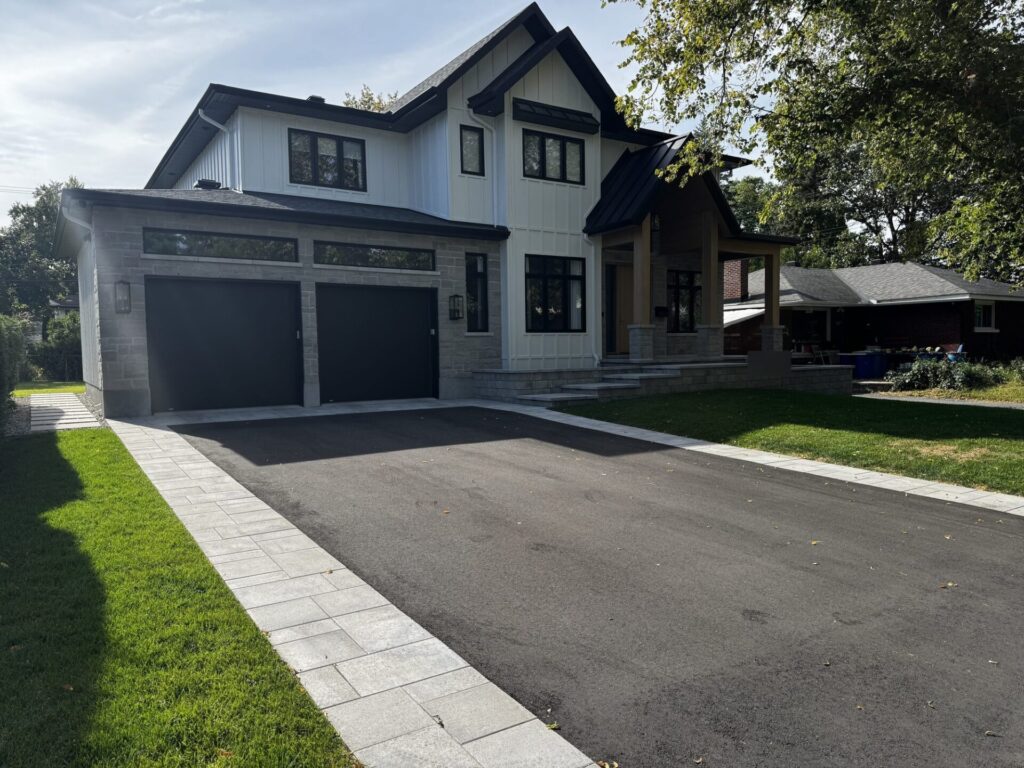
Most of the driveways we build start as one of these:
- Cracked or heaving asphalt that's due to come out anyway
- A driveway extension for a second car, a trailer or an easier turn into the garage
- Asphalt getting an interlock border, or an apron at the street and the garage
- A narrow driveway on an older lot in a mature neighbourhood
- A new build or infill that still has a gravel pad out front
Our Interlock Driveway Services
Approvals, base, pavers and edges. Here's what goes into each part of an interlock driveway in Ottawa.
Driveway Design and City Approvals
The City has a say in a driveway before anyone picks a paver, so that’s where we start. Where a driveway meets the street, the City calls it a vehicular access, and building, widening or changing one needs a City access permit. Zoning sets how wide a driveway can be and how much of the front yard can be paved, and in mature neighbourhoods the City also looks at how the driveway fits the street.
- The rules for your address checked before anything’s drawn, so you’re not redrawing later
- A width and shape that fit those rules, your vehicles and the way you back out
- Grades that carry water to the street and away from the garage and the foundation
- The water shut-off cap at the property line left reachable at finished grade
- A layout planned with the front walk and steps, so the front of the house reads as one landscape design
Building a Base for Vehicles
A driveway that ruts or sinks almost always failed underneath. Cars and trucks press down on the same two tracks every day, and Ottawa’s freeze-thaw keeps working at whatever’s below them. So we dig deeper than we would for a patio and build heavier.
- Ontario One Call locates booked about two weeks before the dig, and a site walk with the foreman on day one
- Old asphalt, concrete or gravel broken out and hauled away
- Soft ground and clay dug out and replaced with base stone, compacted in layers over geotextile fabric where the soil calls for it
- Edge restraint along every side, so turning tires and plow blades don’t push the border out of line
- Grades checked at the garage slab and where the driveway meets the street, so meltwater runs off instead of pooling at the door
Pavers, Patterns and Borders
Driveway pavers need to be thicker and tougher than patio pavers, and the laying pattern matters as much as the stone. We’ll show you ones made for vehicle traffic and Canadian winters, from suppliers like Techo-Bloc and Central Precast, and tell you plainly how each one wears.
- Pavers sized and rated for cars and trucks, not just foot traffic
- Herringbone and other patterns that lock together better under turning tires
- Blended colours that hide tire marks, oil drips and the odd salt stain better than one flat colour
- Border bands, or a contrasting apron at the street or the garage, including next to an existing asphalt driveway
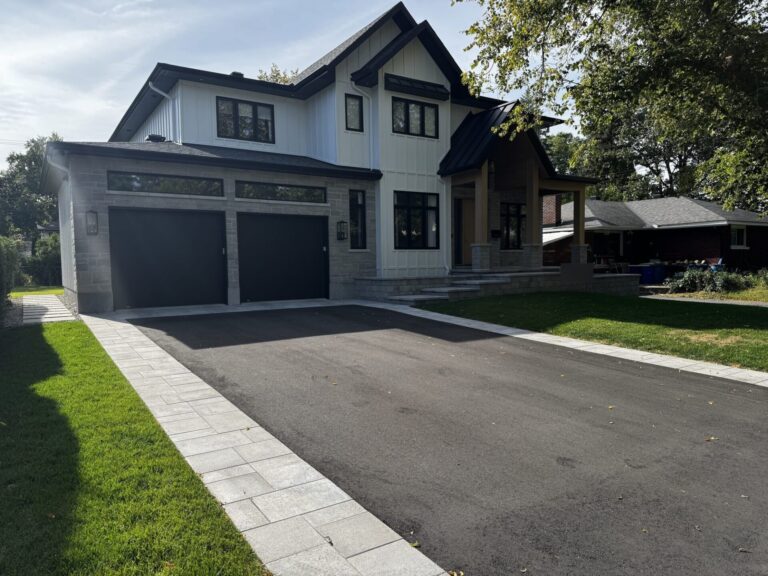
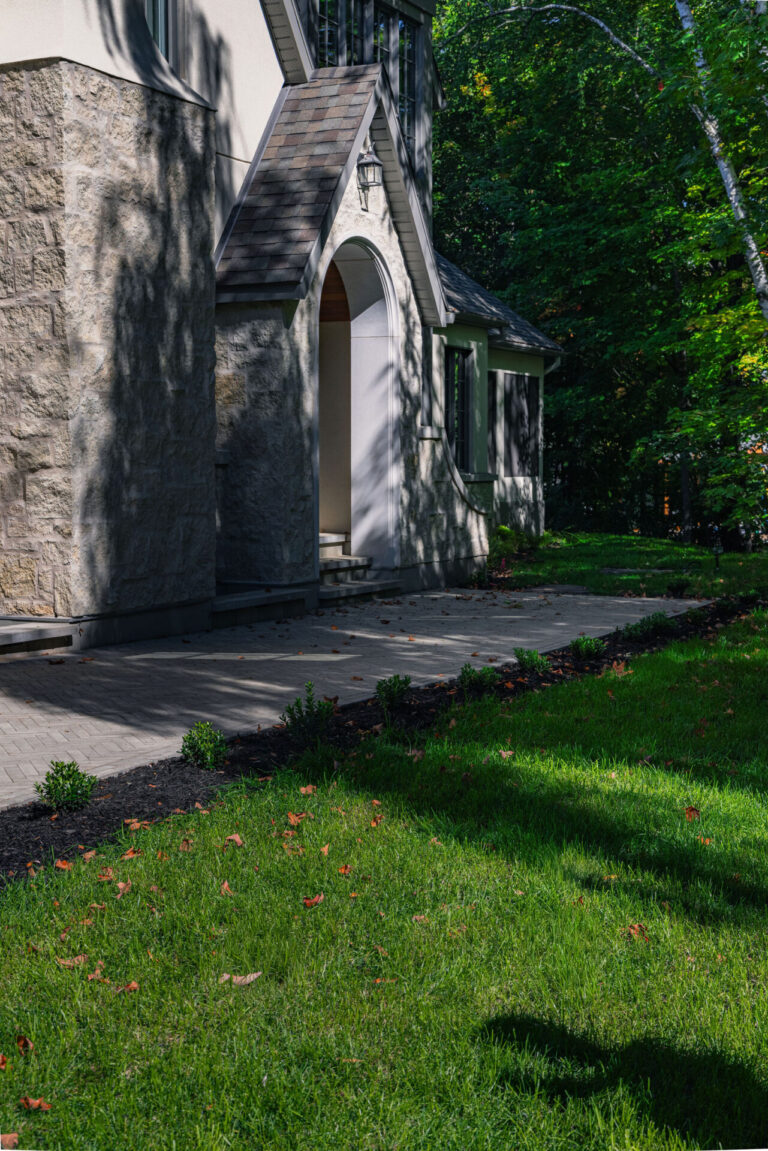
Recent driveway and front entry projects: a herringbone parking pad and front entrance at a new stone home in Rothwell Heights and slab steps, planter walls and driveway border bands at a new build in the west end. Building south of the city? See interlock driveways in Manotick. For paver types, colours and layouts, read our guide to driveway interlock materials and patterns.
Interlock Driveways vs. Asphalt and Concrete
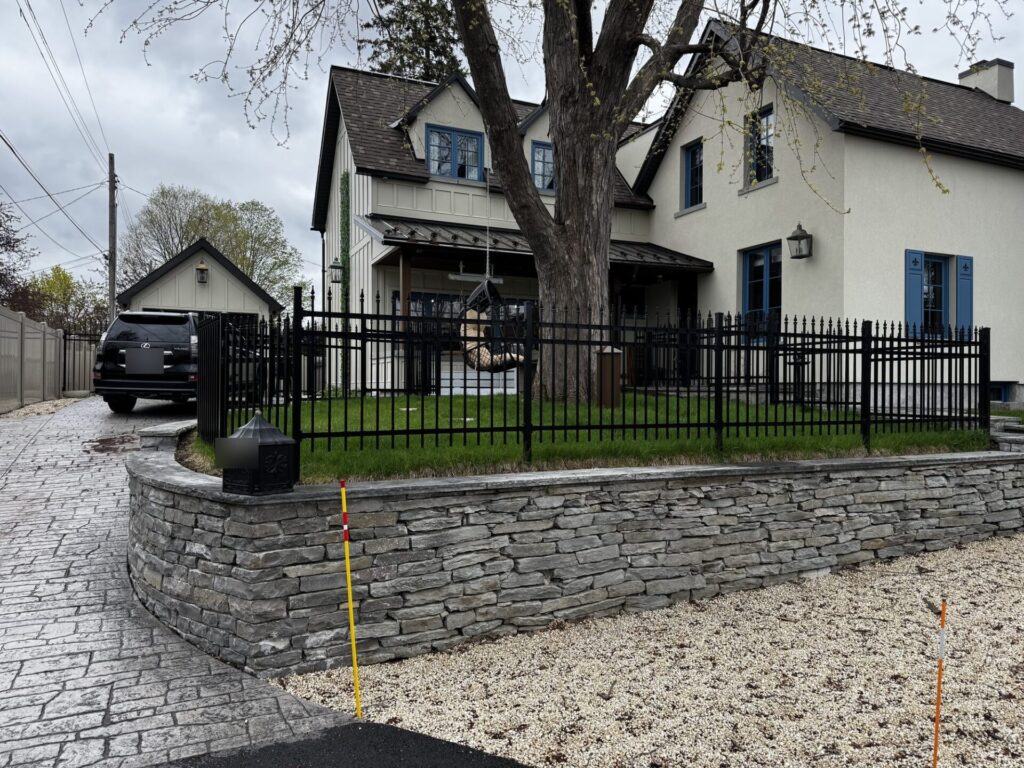
Interlock costs more up front than asphalt. Here's what you get for it, and what it asks of you:
- It handles frost better than a slab: poured concrete that heaves tends to crack straight across. Interlock moves a little at every joint and settles back, as long as the base under it was built properly.
- Repairs are spot repairs: if a section settles or the City has to dig to a service line, those pavers come up and go back down. A patch in asphalt never quite matches the rest.
- It isn’t maintenance free: sweep it, top up the joint sand now and then and go easy on the salt. Weeds in the joints usually mean the sand’s gone low.
- It outlasts asphalt: asphalt needs sealing and eventually resurfacing. A well-built interlock driveway keeps going long after, which is a big part of why people pay more for it.
Our Design-Build Process
Every driveway runs through the same four steps we use on every project. On a driveway, the City's rules get checked during the first one, so the design never has to be redone halfway through.
- 1. Consultation: We walk the property with you, talk through how you want to use the space and set a realistic price range for your driveway. First conversations are with our team.
- 2. Design: Design takes 6 to 8 weeks. You get 3D renders, construction plans, building details and a planting list, with revisions until it feels right.
- 3. Build: We dig deeper for vehicle loads, compact a heavy base, set the pavers and lock the edges. Our own crews do the work, with a dedicated project manager handling the schedule, materials and updates.
- 4. Warranty: Interlock and retaining walls come with a 3-year limited warranty, and we walk the finished space with you before we call it done.
More on how a project runs from start to finish and how design works with us.
Recent Driveways and Entries We've Built
Real driveway and entry work from our own crews. Each one sits on a dug-out, compacted base, and each photo links to the full project.
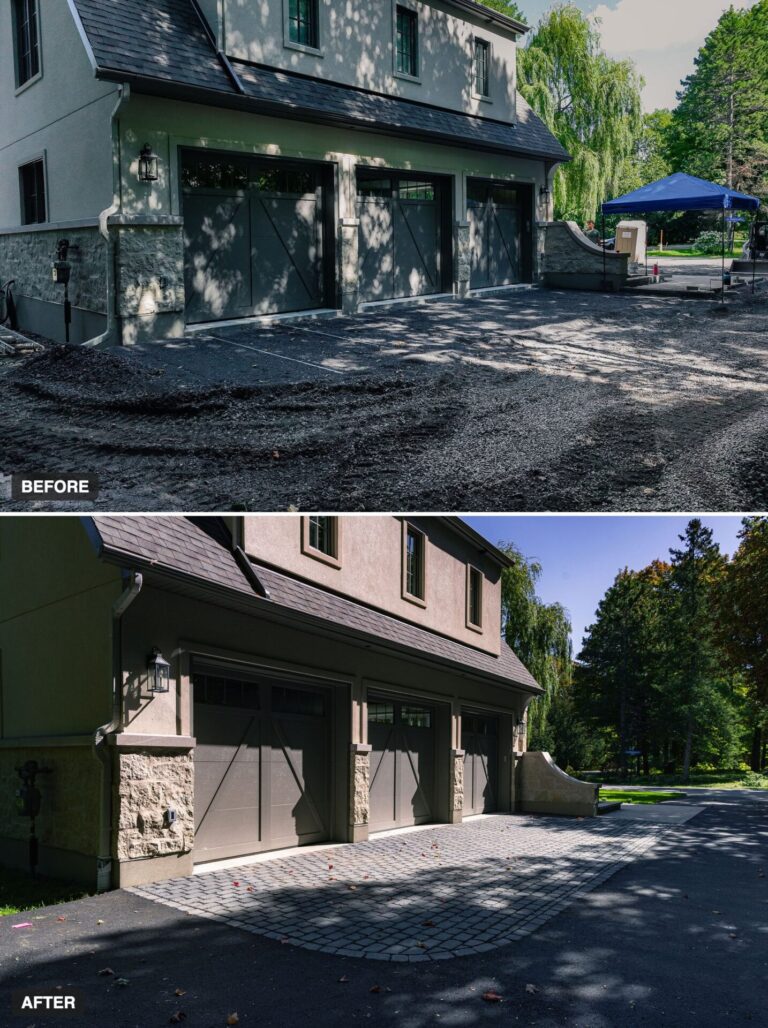
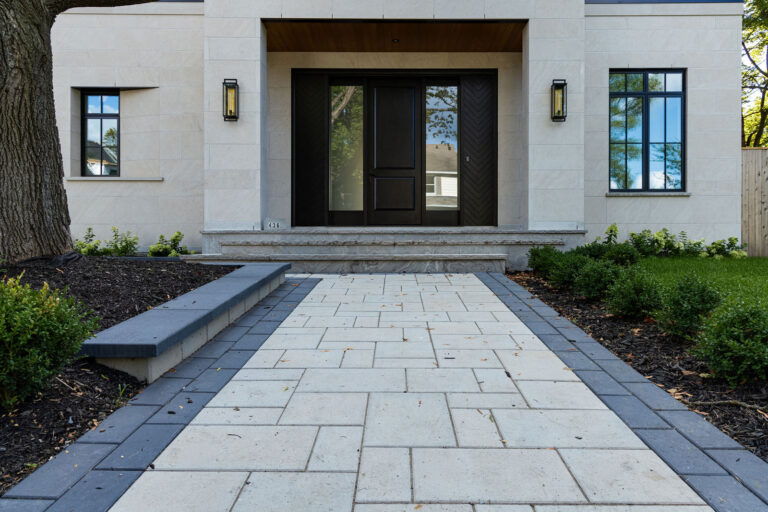
On this new stone home in Rothwell Heights, the drive in front of the garage was loose gravel. We dug it out, built a new compacted base and finished it in pavers that tie into the front walk and entry.
More in our front yards and driveways gallery, or read what an interlock driveway costs in Ottawa.
Why Choose WLS Landscaping for Interlock Driveways in Ottawa?
You'll only ever see the top few centimetres of your driveway. These are the things we do about the rest of it.
Approvals Sorted Up Front
We look up the City’s access permit rules, the zoning width limit and how much of your front yard can be paved before the design starts. If part of the plan needs City approval, you’ll hear about it in the first conversation, not after the pavers are ordered.
One Crew, Start to Finish
The same crew breaks out the old driveway, builds the base and lays the last paver. They’re our own people, led by a working foreman who’s on site all day running the compactor and checking grades, not a subcontractor we’ve never met.
Planned Around Your Street
A driveway job means dump trucks, a compact track loader and a lot of stone arriving at the front of the house. We plan deliveries so the sidewalk and your neighbours’ driveways stay clear, and you’ll get a confirmation a couple of days before the crew arrives so you can move the cars.
A Limited Number of Projects
We book a limited number of projects each season. Our team takes the first call, and once you’re on the schedule, a dedicated project manager orders the material, books the deliveries and sends you an update, usually twice a week.
See the projects
Real yards we've built around Ottawa. Tap one to see the full project.
Thinking About a New Driveway?
Tell us what's out front now, how many vehicles it needs to hold and if you're hoping to widen it. Your first conversation is with our team. We'll flag any City approval or zoning issue for your address, tell you what the base will need and give you a realistic price range before you spend anything on design. Builds go in the order contracts are signed, so the earlier you call, the better your spring start.
Frequently asked questions
How much does an interlock driveway cost in Ottawa?
It comes down to the size, what has to be removed, how much digging and base the soil needs and which pavers you pick. Interlock costs more up front than asphalt, and a wider driveway or an extension adds base and pavers in proportion. Our interlock driveway cost guide walks through published Ottawa prices and where the money goes, and we’ll give you a realistic range for your driveway in the first conversation, before you pay for any design.
Do I need a permit to widen my driveway in Ottawa?
If you’re changing where the driveway meets the street, yes. Creating or widening that connection, which the City calls a vehicular access, needs a City access permit, and zoning limits how wide a driveway can be and how much of the front yard can be paved. We check the rules for your address before we draw anything, so you know where you stand before the design is done.
How is an interlock driveway built differently from a patio?
It goes deeper and gets heavier. A patio carries people and furniture. A driveway carries vehicles every day, so we excavate more, bring in more base stone, compact it in more layers and use a thicker paver. A thin base is what lets a driveway rut, and it’s the most common reason interlock driveways fail.
Can you add interlock to my existing asphalt driveway?
Yes. A border band along the sides, an apron where the driveway meets the street or a strip at the garage can go in next to existing asphalt, and it’s a lower-cost way to change how the front of the house looks. The asphalt gets a clean cut edge and the interlock gets its own compacted base, so the two settle together. If the asphalt’s near the end of its life anyway, we’ll say so, because replacing it all at once can make more sense.
How do I look after an interlock driveway in winter?
Go easy with the salt and use de-icer sparingly, since salt is hard on every driveway surface. If you hire a plow, ask them to set the blade or skid shoes a little high so they ride over the pavers instead of catching an edge. A chipped paver can be lifted out and replaced, so keep a few spares from the job in the garage. We don’t do snow removal ourselves, so pass this along to whoever does.