
Most landscaping in Ottawa doesn’t need a permit. A patio at grade or new planting beds don’t go to the City. But a handful of common projects do, and they’re usually the ones people don’t expect: a hot tub, a deck that sits a little too high, a wider driveway, or a big tree right where the new patio was supposed to go.
Here’s how it breaks down, project by project, based on the City of Ottawa’s own pages and its Landscaping Education Guide (March 2026). The City’s by-laws are the final word, so if you’re not sure about your property, call 3-1-1.
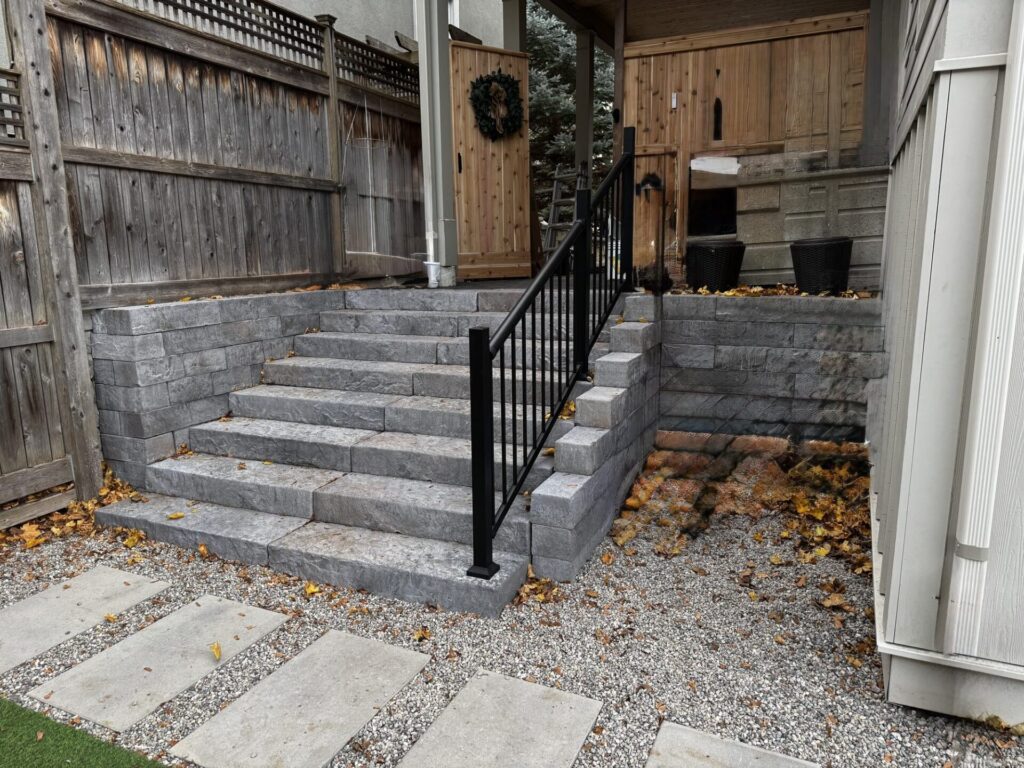
Retaining walls
A retaining wall needs a building permit when it’s more than 1 m high and it’s next to public property, next to the access to a building, or on private property that’s open to the public. A low garden wall or a short terrace in the back yard usually doesn’t meet that test.
Two things catch people out. First, a wall in the City’s right of way (the strip along the road that most people assume is part of their lawn) needs an encroachment agreement with the City, and the guide says those are only approved occasionally. Second, no permit doesn’t mean no rules. A wall still has to drain properly, stand up to freeze-thaw and keep water off your neighbour’s lot. We cover the design side on our retaining walls page.
Steps, landings and decks
The guide says stairs, landings and decks that provide access to a building can need a building permit. For decks, the City’s deck permit page is specific. You need a permit if:
- the deck is attached to or next to the house and its walking surface is more than 600 mm (24 in.) above the ground beside it, whatever its size,
- it’s an elevated deck that’s the main way into the house, or
- it’s freestanding, larger than 10 square metres and more than 600 mm above the ground.
Even when no permit is needed, steps still have to meet the Ontario Building Code for rise and run, guards, handrails and landings. Zoning setbacks from the lot line apply too, and the City’s Development Information Officers (reached through 3-1-1) can tell you what applies at your address.
Pools, hot tubs and ponds
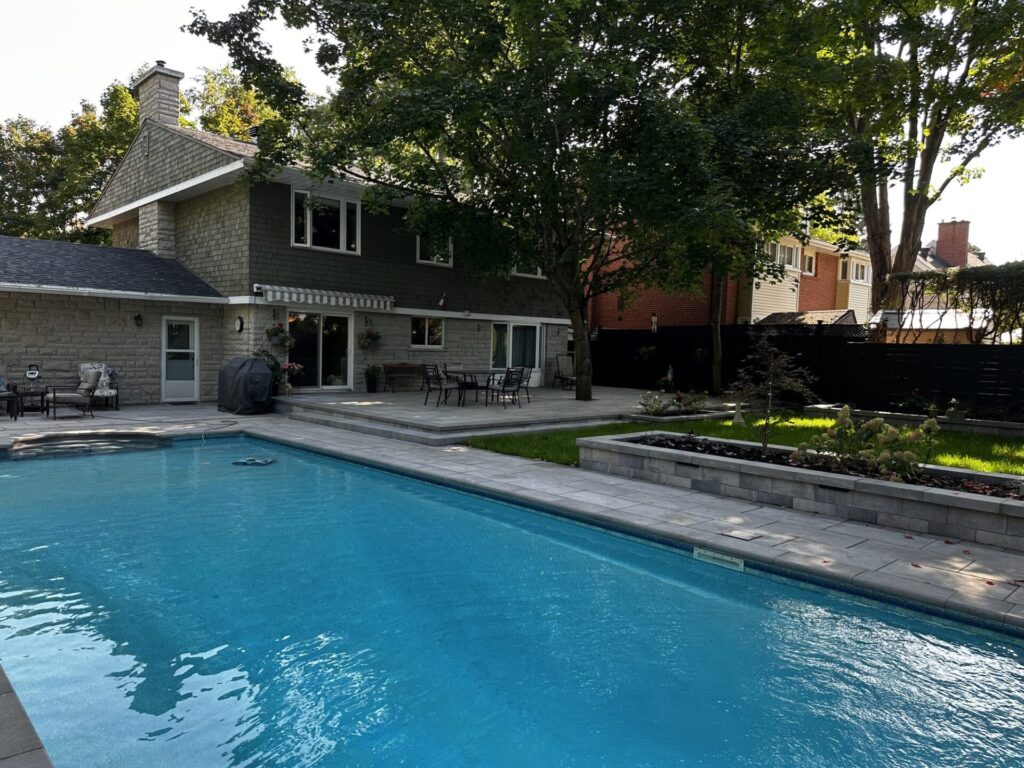
This is the one most people miss. In Ottawa, any privately owned outdoor pool that can hold water 600 mm (24 in.) deep or more at any point needs a pool enclosure permit under the Pool Enclosure By-law (2013-39). The City’s page says that includes ponds, inflatable pools and hot tubs.
A few details from that page:
- Every enclosure has to be at least 1.5 m (5 ft) high.
- An existing yard fence doesn’t get you out of the permit. The City still checks that it meets the requirements.
- A hot tub with a compliant safety cover that’s locked when it’s not in use is exempt from the fence and gate requirements, but it still needs a pool enclosure permit and an inspection.
- If you use a temporary enclosure, it has to be inspected before the pool gets any water, and the pool can only stay filled for up to 14 days before the permanent enclosure has to be in.
The fence, gates and patio around a pool have to work together, so settle the enclosure early. There’s more on planning around a pool in our post on pool landscaping in Ottawa.
Sheds, gazebos and pergolas
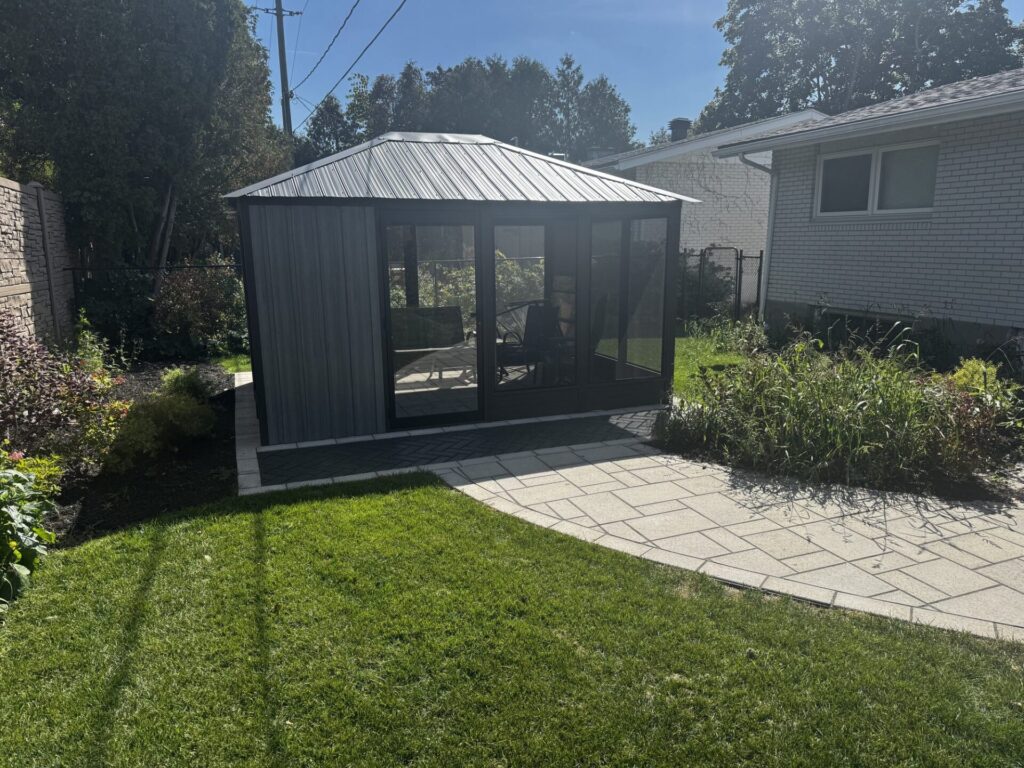
The City’s “Do I need a building permit?” page says a detached accessory structure, like a gazebo or tool shed, that measures less than 10 square metres doesn’t need a building permit. Over 10 square metres (108 sq. ft.), it does. That’s smaller than a lot of people picture, so measure before you order one.
Under that size, the structure still has to meet zoning, which covers things like how close it can sit to the lot line.
Fences
Standard residential fences don’t need a permit, according to the City’s guide. They do have height limits: 1 m in a front yard and 2.1 m in a back or side yard. Fences aren’t allowed in the City’s right of way at all, and a fence that encloses a pool needs the pool enclosure permit above.
Driveways and walkways out front
The front of your lot is where the City has the most say, because part of it is usually the City’s right of way. Under the Access By-law (2026-139) and the guide:
- Resurfacing a driveway or changing its material, with no change to its size or slope, doesn’t need an access permit.
- Most other driveway installs or changes need an access permit and a road cut permit. A driveway extension can often go in without one if it’s no wider than 1.8 m, isn’t asphalt and meets the guide’s other conditions.
- One walkway can be added in the right of way without a City permit if it meets a list of conditions, including being no wider than 1.8 m, keeping the total hard surface to 50 per cent of the frontage or less, staying outside a tree’s critical root zone and ending at the sidewalk if there is one.
- Digging in the right of way needs a road cut permit, and storing materials or equipment there needs a temporary construction encroachment permit.
We went through the other front yard rules, like keeping half the front yard soft, in our post on Ottawa’s hardscaping contractor licence.
Trees
Trees are where a patio plan can stall. Under the Tree Protection By-law (2020-340), in the urban area you need a permit to remove or injure a distinctive tree, meaning 30 cm or more in diameter at breast height, on a lot of 1 hectare or less. On larger urban lots, the threshold drops to 10 cm. Every City-owned tree, including the street tree out front, needs a permit too.
The by-law also protects the critical root zone, which reaches 10 cm out from the trunk for every centimetre of trunk diameter. Near protected trees, you can’t raise or lower the grade in that zone or park materials and equipment there. On a tree 40 cm across, that’s 4 m out from the trunk, which can take a real bite out of a patio plan.
Before anyone digs
One rule applies to every project, permit or not: get underground utilities located through Ontario One Call before you dig. It’s provincial law, even for a hand shovel.
The simplest way to stay on the right side of all this is to sort it out at the design stage. A wall, a deck height or a pool fence is much easier to move on paper than on site. If you’re planning a project and want to talk it through, book a consultation with us.
Frequently asked questions
Do I need a permit to build a patio in Ottawa?
A patio at grade in the back yard isn’t on the City guide’s list of hardscape that needs a building permit (stairs, landings and decks that give access to a building). Permits come in with a raised deck, a tall retaining wall in certain spots, a pool or hot tub, a protected tree, or work in the right of way.
How high can a retaining wall be without a permit in Ottawa?
The permit rule applies to walls more than 1 m high in the spots listed above. A wall 1 m or lower doesn’t trigger it, though it still has to be built and drained properly.
Does a hot tub need a permit in Ottawa?
Yes. A hot tub with a locked, compliant safety cover is exempt from the fence and gate requirements, but it still needs a pool enclosure permit and an inspection.
Do I need a permit to widen my driveway in Ottawa?
Usually, yes: an access permit and a road cut permit. The exception is a small extension (no wider than 1.8 m, not asphalt, and meeting the guide’s other conditions). Resurfacing in the same size and slope doesn’t need one.
Can I remove a tree on my own property in Ottawa?
On urban lots of 1 hectare or less, a tree 30 cm or more in diameter at breast height needs a permit. On bigger urban lots, it’s 10 cm. City-owned trees always need one.