
Interlock Patios in Orléans
Interlock patios, walkways and steps in Orléans, built on a base that suits the clay and holds up through the winter.
- Base built for clay soil
- Patterns that suit the house
- Steps and landings built in
- Old interlock lifted and rebuilt
Interlock Patio Design and Installation in Orléans
We design and build interlock patios in Orléans for homeowners who want the backyard to work better, not just look newer. Orléans has a mix of homes from the 1980s and 90s in neighbourhoods like Convent Glen, Fallingbrook and Queenswood Heights, and newer streets in Avalon and the east end. A lot of the interlock out there was laid quickly on a thin base, and parts of the area sit on clay that holds water. That's why so many older patios have sunk at the corners or pull away from the house. We build ours from the base up, so the pavers stay where we put them.
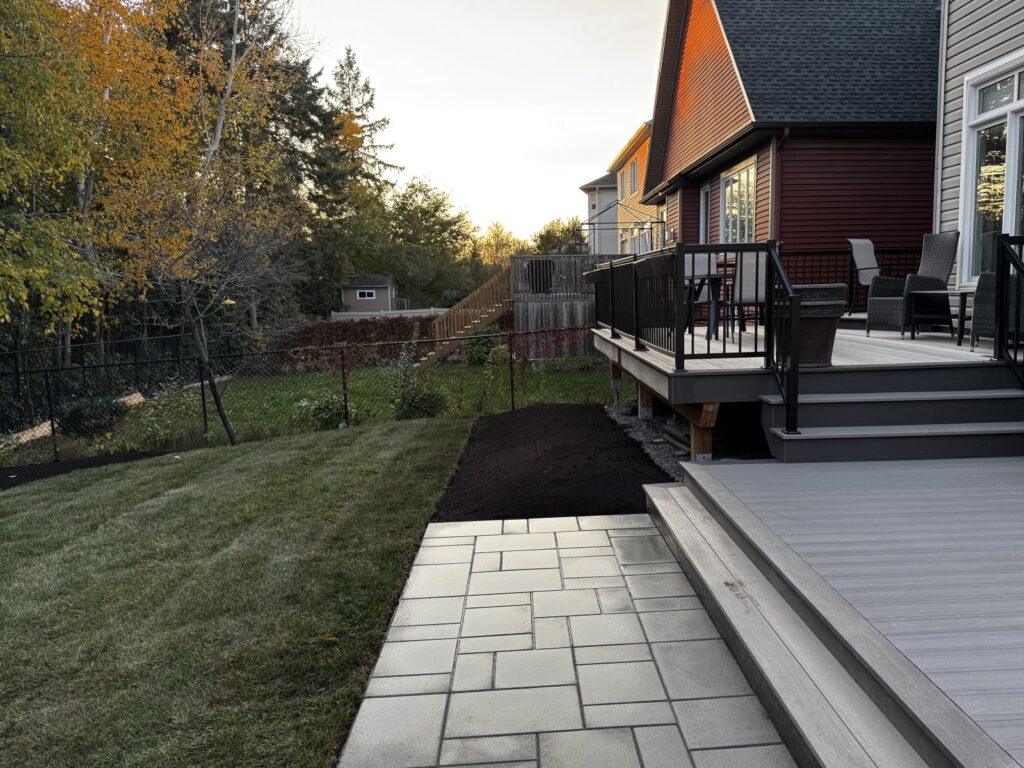
Who Calls Us About Interlock in Orléans
Most interlock calls from Orléans fall into two groups: an older patio that's heaved or sunk, or a newer home with a builder-grade backyard that needs a proper place to sit.
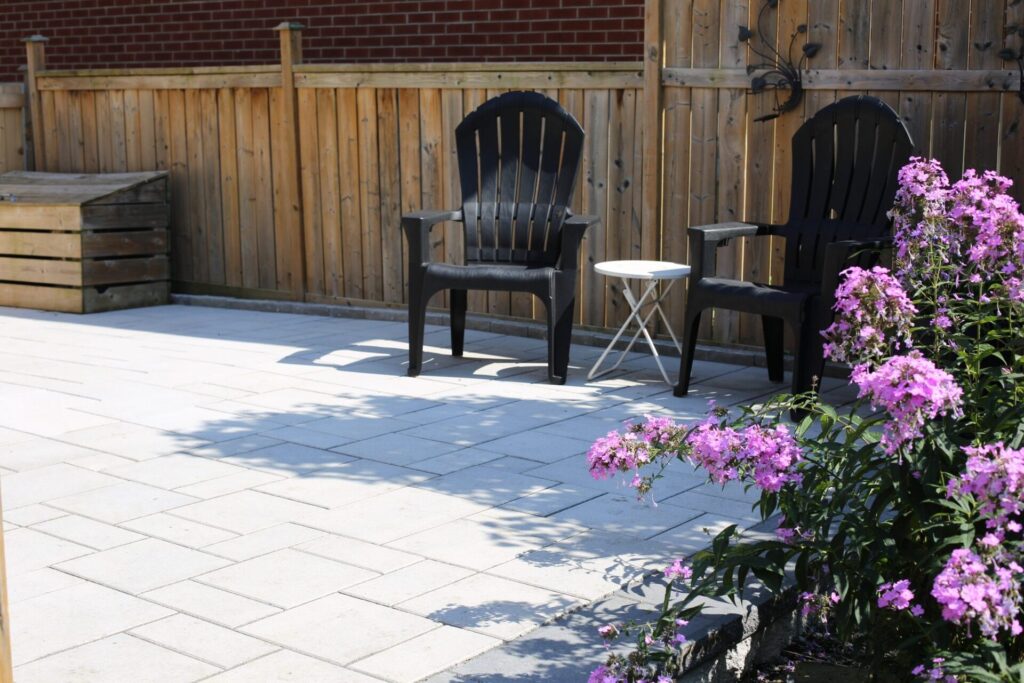
Residential
Most of the Orléans interlock projects we see start as one of these:
- Interlock from the 90s that's sunk, rocking or covered in weeds
- A deck at the back door that's ready to come out
- A newer backyard with sod and a small slab
- A side yard that turns to mud every spring
- A front walkway and steps that don't match the house anymore
Our Interlock Services in Orléans
Design, base, laying and the edges. Here's what goes into interlock that stays level.
Design and Patterns
We start with how the space gets used, then pick the pavers, pattern and border to suit the house. Lighter colours stay cooler in full sun, and large slabs give a cleaner look on modern homes. For bigger changes to the yard, we plan it as part of a full landscape design in Orléans. For materials, base depths and costs across the city, see our main guide to interlock patios in Ottawa. For a recent example nearby, see our flagstone patio and stone steps project in Orléans.
- Patterns and borders picked to suit the home
- Paver sizes and colours from the suppliers we use every week
- Steps, landings and seat walls drawn in from the start
Base for Clay Soil
Clay holds water, and water plus frost is what lifts pavers. We excavate below the topsoil, add geotextile where the ground calls for it and build up compacted granular base in layers.
- Excavation depth set by what the patio or walkway will carry
- Slope built into the base so water drains away from the house
- Low spots and downspouts dealt with before the pavers go down
Rebuilding Old Interlock
Old interlock can sometimes be lifted, the base rebuilt and the same pavers reset. Other times the pavers are faded or chipped enough that new ones make more sense. We’ll tell you which, and why.
- Pavers lifted and sorted for reuse where they’re in good shape
- Base dug out and rebuilt instead of topped up
- New edge restraint and polymeric sand in the joints
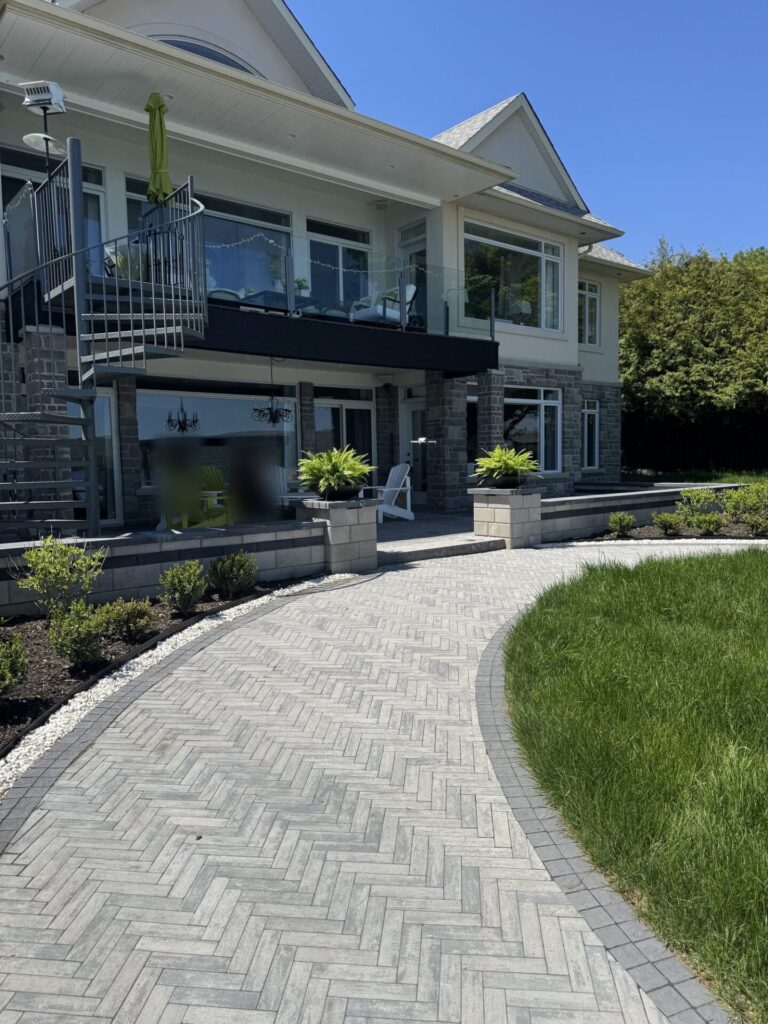
Interlock, Slabs or Natural Stone?
All three make a good patio in Orléans. Here's how they differ.
- Interlock pavers: smaller concrete units laid in a pattern. Good for curves, borders and driveways, and easy to repair one paver at a time.
- Large-format slabs: bigger concrete units with fewer joints and a cleaner, modern look. They need a flatter, more precise base.
- Natural stone: cut stone with colour that doesn’t fade, suited to older homes and gardens. More on natural stone patios.
- Winter: all three need the same base and drainage to survive freeze and thaw.
Our Design-Build Process
Every interlock project runs through the same four steps we use on every project. The base and drainage get sorted during the first two, so nothing has to be redone halfway through.
- 1. Consultation: We walk the property with you, talk through how you want to use the space and set a realistic price range for your interlock. First conversations are with our team.
- 2. Design: Design takes 6 to 8 weeks. You get 3D renders, construction plans, building details and a planting list, with revisions until it feels right.
- 3. Build: We excavate, build and compact the base in layers, set the edges, lay the pavers and sweep in polymeric sand, then finish the steps and planting around them. Our own crews do the work, with a dedicated project manager handling the schedule, materials and updates.
- 4. Warranty: Interlock and retaining walls come with a 3-year limited warranty, and we walk the finished space with you before we call it done.
More on how a project runs from start to finish and how design works with us.
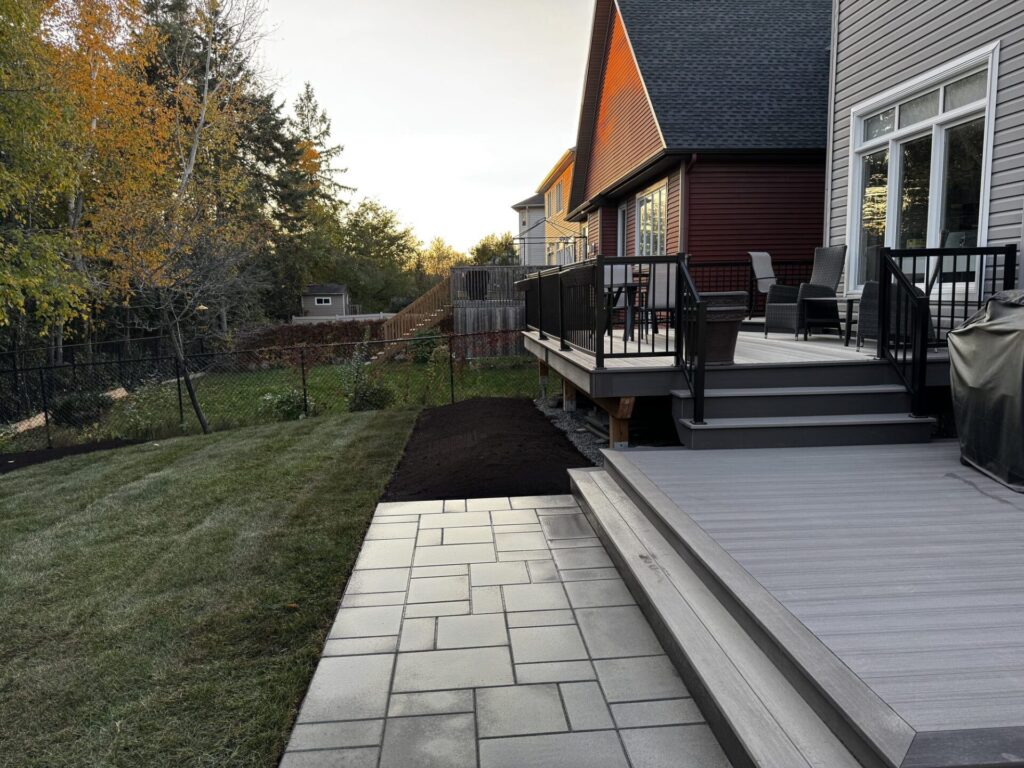
Why Choose WLS Landscaping for Interlock in Orléans?
Interlock is only as good as the base under it. These are the things we do to keep it level.
Built From the Base Up
We excavate to the depth the job needs and compact the base in layers. It takes longer than topping up old sand, and it’s the reason the pavers stay flat.
One Crew, Start to Finish
The same crew digs it out, builds the base and lays the pavers. They’re our own people, led by a working foreman who’s on site all day.
The Whole Yard in Mind
We plan the patio with the walkways, steps and planting around it. If you’re starting from scratch, see how we approach patio design and construction across Ottawa.
A Limited Number of Projects
We book a limited number of projects each season. Our team takes the first call, and once you’re on the schedule, a dedicated project manager orders the material, books the deliveries and sends you an update, usually twice a week.
Planning Interlock in Orléans?
Tell us what's there now and how you'd like to use the space. Your first conversation is with our team. We'll walk the yard, talk through pavers and layout and give you a realistic price range before you spend anything on design. Builds go in the order contracts are signed, so the earlier you call, the better your spring start.
Frequently asked questions
Why does interlock sink in Orléans backyards?
Usually it’s the base. A thin layer of sand or gravel on clay can’t drain, so water sits under the pavers, freezes and lifts them. Over a few winters the corners drop and the joints open up.
Can you reuse my old interlock pavers?
Sometimes. If they’re not chipped or badly faded, we can lift them, rebuild the base and relay them. If the colour’s gone or the style is dated, new pavers usually make more sense for what the job costs.
How long does an interlock patio take to build?
Most patios take one to two weeks on site, depending on size, access and the steps or walls around them. Design comes first and takes 6 to 8 weeks.
Do I need a permit for an interlock patio in Orléans?
A patio at ground level usually doesn’t. The City’s building permit page lists landscaping as not needing a building permit, and the work still has to follow the Ontario Building Code and zoning. Raised patios and walls get checked before we draw them.
How much does an interlock patio cost?
It depends on the size, the pavers, how much base it needs and the steps around it. Our interlock patio cost guide explains what drives the price, and we’ll give you a realistic range for your yard after the first visit.